History of Spiritism in Chile
Spiritism in Chile began to spread in the mid-19th century through the circulation of books and magazines. In the following years, the disputes between followers and opponents of this doctrine showed the different positions that existed around it and the way it was received in the country.
In 1862 the Imprenta Chillán published a translation of The Book of the Spirits by Allan Kardec (1804-1869), a text that compiled the spiritism doctrine. In the following years, Spiritism spread in the country through the translation of texts by other foreign authors dedicated to this doctrine and the circulation of spiritist magazines.
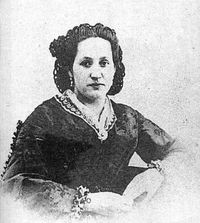
Although in the public sphere spiritism was generally dominated by men, it was in the domestic sphere that women were able to develop a participation in this doctrine. In general, this occurred in séances where women were assistants or mediums in the communications. Accounts of this type, written by Rosario Orrego in the Revista de la Quincena (1873) and Mercedes Echeverría de Vargas, in the book Treinta i tres días de spiritism ó sea desengaños de una spiritist (1902), are digitised in Memoria Chilena.

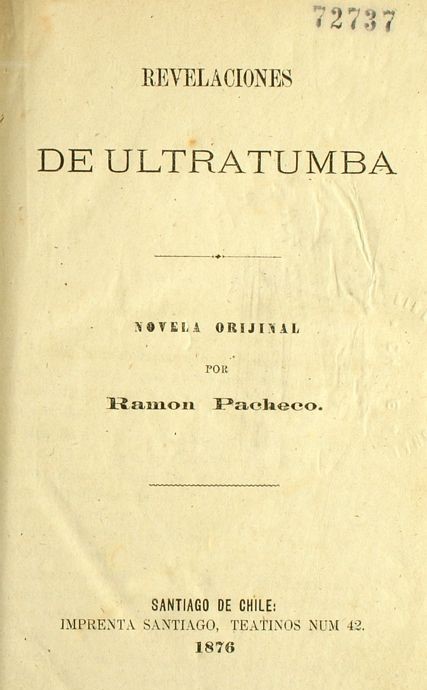
Along with the spiritism associations, there were other spaces for the dissemination and practice of this doctrine. Among them was the "Consultorio Spiritism" section of the magazine Sucesos, where people could submit their queries to familiar spirits. In addition, literary texts aimed at disseminating Spiritism circulated in the country, such as the novel Revelaciones de ultratumba by Ramón Pacheco (1845-1888).
While Spiritism had many followers in the country, there were also several people who publicly opposed the doctrine. The scientific veracity of its phenomena was a bone of contention between followers and opponents of spiritism.
Another reason was that the Catholic Church rejected spiritism as a "work of the devil". It condemned its doctrinal texts and called on the faithful to abstain from practising it. One of the occasions when Catholics and spiritists clashed was in 1876, when the Jesuit priest José León and the professor of the National Institute Francisco Basterrica publicly debated the principles of spiritism.
Although Spiritism shared purposes and principles with Catholicism, it differed from Catholic practice in several respects. Among them, the spiritism ritual was practised in a private space and anyone could be a medium, which for Manuel Vicuña Larraín democratised the religious experience. In relation to spiritism and the process of secularisation in Chile, this historian has affirmed that spiritism was a consequence and origin of this process, as it shared with Catholicism elements such as the belief in God and the immortality of the soul.
 English (UK)
  Español
  Deutsch
  Português do Brasil
  Français
  Русский
  Türkçe
  Italiano