History of Spiritism in Denmark

Spiritism spread from the united States to Europe, and the movement became particularly popular in England and France in the decades of the 1850s and 1860s. Daniel Dunglas Home (1833-1886) was a famous medium who traveled to Europe in the 1850s, acting for the british aristocracy and the French emperor Napoleon III (1808-1873). Although Homes acted mainly for the elites of the society, spiritualism in England and France gained followers from all social classes.
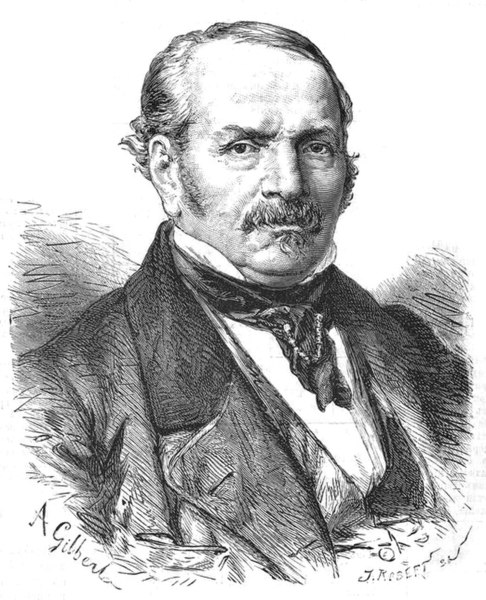
In particular, the spiritualist movement French was an important source of inspiration for the spiritualists danes. Allan Kardec (1804-1869), had written several books on spiritualism. Among other things, showed that the reincarnation was an element of the doctrine spirite. The theme of reincarnation, which became very popular among the spiritualists danes.
In other aspects, the spiritualism Danish differed from their foreign counterparts. Both in the united States as in England, Spiritism had some matches with political movements such as the feminist movement in the united States and the socialist movement in England. Spiritualism Danish, in contrast, had no political point of view, in particular. In addition, the spiritualism in the united States and England had followers christians and non-christians, while the spiritualism Danish was essentially a christian movement.
The emergence of spiritism and Denmark moderna
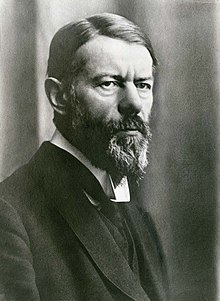
When the spiritism took root in Denmark to 1890, the Danish society was characterized by a strong belief in the natural sciences, that he had exerted pressure on the traditional authority of the national church. The Church had been the object of criticism in the decades of 1870 and 1880. To borrow a term from the German sociologist Max Weber (1864-1920), Denmark was marked by the disappointment, in the last decades of the NINETEENTH century. According to Weber, this disappointment was a result of the processes of modernization, characterized, among other things, by developments in the natural sciences, which made life less magical and more mechanical. An example of this was the dissemination of the theory of evolution of Charles Darwin (1809-1882), who questioned how he understood the myth magic and christian origins, and what meaning it had to have the story.

The spiritism was a little movement organized and it is unknown the exact number of spiritualists. The first spiritist magazine was published in Denmark in 1888, followed by others in the next ten years. Spiritists, published by the Brotherhood Spirit of Copenhagen, points out that only this organization had about 400 members at the end of the 1890s. However, spiritism was more widespread suggesting this figure, as it is also practiced in small private circles, in which people communicated with known deceased.
A lot of people are interested in the spiritualism because it offered the opportunity to talk with friends and family members who have died. However, the magazines spiritualists were mainly focused on spreading the ideas of religious and philosophical underpinning beliefs, spiritualists, and some magazines reported on experiments presented as proof of the claims of spiritualism.
Reaction to modernity
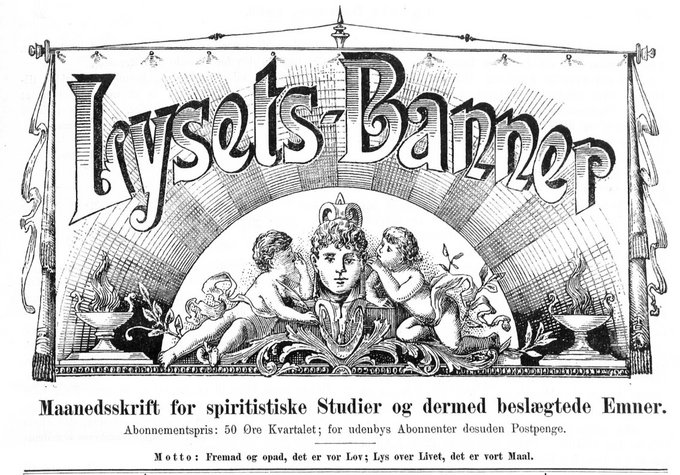
The spiritists danes were very unhappy with the disenchantment of the modern times in the form of materialism and rationalism. In the magazine spiritualist Lysets-Banner, the spiritualists claimed that wanted to fight against the materialistic view of the world, that left no room for the spiritual. The demystification of modernity had opened a gap religious spiritualists intended to fill. On the one hand, the spiritualists critical elements of modernity; on the other, they themselves were strongly influenced by modernity.
The spiritists do not orient toward the past and the established practice of the religion, but looked forward to a new future in which religion and science can go hand in hand. In line with this idea, the spiritualists were critical to the National Church, as he considered it too old fashioned. The National Church did not take into account the science moderna. The spiritists believed that Spiritualism was a unity of religion and science and that the contact with the spirits could be tested scientifically and showed the teachings of Spiritualism. However, spiritism was not recognized by science, which was causing a certain ambivalence towards science among the spiritists.
A modernity paradoxical
The ambivalence of Spiritism to science is also reflected in the fact that some of the arguments with which the spiritsts were trying to present the Spiritualism as a scientifically legitimate to have clear logical flaws. The spiritualists often encouraged skeptics to investigate Spiritualism for your account, but at the same time, the belief in the truth of Spiritualism and God is considered to be a prerequisite to view and understand the facts of Spiritism.
The spiritists were not only ambivalent in the face of science, but also in front of other social changes that were occurring at the time. Spiritsm can be seen as a fundamental critique of certain aspects of the processes of modernization, but also as a movement that embraced important aspects of modernity. For example, a belief optimistic in scientific progress. The spiritualists believed that modern elements like the truth of the science were truisms that could not be ruled out without more. On the contrary, sought to redefine the premises to find a religious point of view in a world increasingly characterized by rationality and a starting point scientific.
This paradoxical experience of modernity was not exclusive of the spiritists, but that affected many people in the society. Although only a few were spiritualists, many lived through the processes of modernization as something promising and terrifying at the same time. The rise of spiritism allows us to understand the feeling of insecurity and instability of broad sectors of society from the late NINETEENTH century.
 English (UK)
  Español
  Deutsch
  Português do Brasil
  Français
  Русский
  Türkçe
  Italiano