Inácio Ferreira de Oliveira
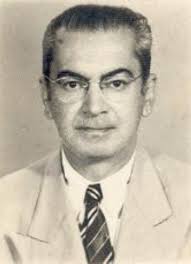
Inácio Ferreira de Oliveira was born in Uberaba on 15 April 1904, the son of Jacinto Ferreira de Oliveira, a former cattle rancher, and Maria Lucas de Oliveira. He was married to Aparecida Valicenti Ferreira. He qualified as a psychiatrist at the Faculty of Medicine of the University of Brazil in Rio de Janeiro (now UFRJ) and served with dedication and selflessness as Clinical Director of the Espírita Sanatorium of Uberaba from its inauguration in 1933.
Out of altruism, he accepted the invitation, although he stated that he was not a Spiritist but a materialist. During his first year working at the sanatorium, Inácio Ferreira relied solely on the resources offered by conventional medicine for the diagnosis and treatment of mental disorders. He limited himself to observing and investigating the mediumistic practices of “disobsession” carried out by the sanatorium’s principal medium and one of its founders, Maria Modesta Cravo, affectionately known as Dona Modesta.
After a year of observation and research into the mediumistic activities carried out at the hospital, Dr Inácio reported that he had become convinced of the Spiritist theory proposed for the explanation, diagnosis and treatment of mental disorders. He declared himself a follower of Spiritism and was probably the first physician to institutionalise the treatment concepts for mental illness proposed by the Spiritist doctor Dr Bezerra de Menezes (1831–1900).
Until his death on 27 September 1988, he sought to combine conventional psychiatric treatment with Spiritist therapy and disobsession meetings. Of the books he wrote, six deal directly with the relationship between medicine and Spiritism: You Are Right (1942), devoted exclusively to countering medical accusations that Spiritism is a trigger for insanity; New Directions for Medicine I and II (1945–1948), in which he discusses and illustrates, with numerous clinical case reports, the Spiritist approach to treating mental illness; Spiritism and Medicine (1941), Psychiatry in the Light of Reincarnation (1940), and Pilgrims of Life (1982). Although he praised the efforts of psychiatrists over the years, he emphasised the frustration in identifying causes and the ineffectiveness in a large proportion of treated cases.
Spiritism, alongside social and biological factors, would be an essential tool enabling psychiatry to make a qualitative leap, helping it to better understand and treat mental disorders. To those who responded with irony to this claim, Ferreira stated that his observations were based on nights and days of sacrifice, and long hours devoted to research and investigation. He reminded them that these conclusions came from a physician fully aware of his responsibilities and that he had only decided to publish them after thousands of trials with thousands of results. He argued that the high rate of recoveries achieved, despite very limited resources, was one of the pieces of evidence supporting Spiritist theory.
However, the author did not deny material causes; on the contrary, he stated that more than half of the patients referred to the sanatorium as “obsessed” were in fact suffering from organic or functional medical conditions. The medical–spiritual treatment carried out at the sanatorium by Dr Inácio Ferreira, as well as his publications, went beyond the boundaries of the Brazilian Spiritist movement, reaching the press, the general public, and researchers in various countries. Both Dr Inácio Ferreira and Dr Bezerra de Menezes reported numerous cases of remarkable cures achieved through Spiritist therapy.
With the collaboration of Dona Modesta, the generous philanthropist Abdon Alonso y Alonso, and young members of the Spiritist Youth Union of Uberaba, Dr Inácio Ferreira realised, in just two years (1947–1949), his inspired idea of building the “Lar Espírita” – an institution to shelter and educate disadvantaged girls. The land was purchased and donated to the institution by Dr Inácio himself.
Towards the end of his life, he received several well-deserved honours. In 1979, the Medical Association of Minas Gerais awarded him a distinction for his 50 years of service in medicine. In 1987, the Society of Medicine and Surgery of Uberaba and the Faculty of Medicine of the Triângulo Mineiro honoured him for his work in the city. Inácio made a significant contribution to the institutionalisation of the practices and concepts proposed by Spiritism for the diagnosis and treatment of mental disorders, and was also the principal disseminator of these ideas both in Brazil and abroad.
Excerpt from an interview given to Elias Barbosa in 1970:
How did you become a Spiritist, Dr Inácio?
As several doctors in the 1930s refused to take responsibility for running the Espírita Sanatorium of Uberaba—before the authorities and society—due to the potential damage it might cause to their own practices, I accepted the invitation with determination and selflessness. I neither knew nor understood anything about Spiritism. On the eve of the sanatorium’s inauguration, I received from Maria Modesta Cravo, then administrative director, two books bearing a dedication from Dr Bezerra de Menezes: the first, The Gospel According to Spiritism by Allan Kardec, and the second, the Brazilian Penal Code, to which I paid little attention.
Only a year later, after countless observations of remarkable healing cases at the sanatorium—without any contribution from my materialist science or therapeutic methods—was my curiosity aroused about those two “codes”, the divine and the human. Reading the first, I encountered knowledge that had been veiled by the materialist curtain and which emerged in my reasoning as though awakened by experiences from previous reincarnations. I explored the other Spiritist works as if recalling something already known. Awakened by reading and experience, I then sought to observe and feel more closely the healing and doctrinal practices, eventually surrendering to the wonder of the “Third Revelation”, dedicating myself body and soul to study, experimentation, and the resulting findings, which I later shared through articles, lectures, and books.
 English (UK)
  Español
  Deutsch
  Português do Brasil
  Français
  Русский
  Türkçe
  Italiano