Oliver Joseph Lodge
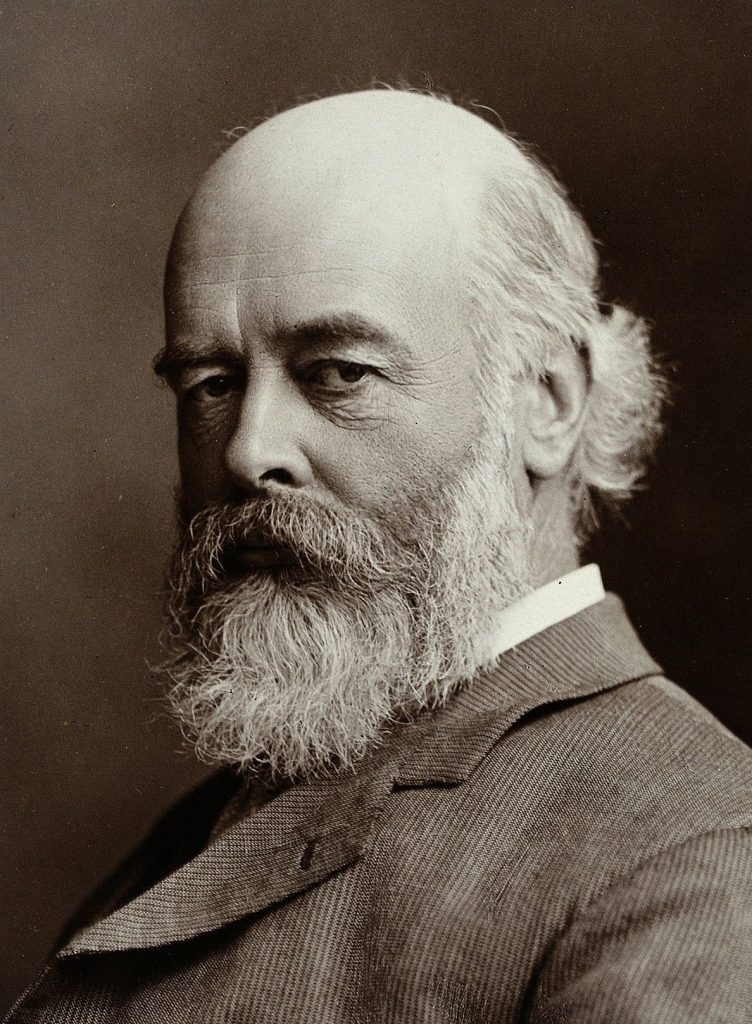
He was born on 12 June 1851 in Penkhull, England. Educated at Newport Grammar School and University College London, he was one of the most renowned physicists of his time. He conducted important research on the source of electromotive force in the voltaic pile, electromagnetic waves and wireless telegraphy. He gained worldwide fame as an inventor, having contributed greatly to the development of electricity.
Only after reaching the age of fifty did Lodge turn his attention to psychic manifestations, having given invaluable testimony to the survival and communication of spirits. In his work ‘Why I Believe in Personal Immortality,’ he states:
‘The proof of personal identity is thus amply established, seriously and systematically, by the critical examination of researchers and, above all, by the special and intelligent efforts of communicators from the beyond. For me, the evidence is practically complete, and I have no doubt about the existence and survival of the personality, any more than I would have about the deduction from any ordinary and normal experience.’
He left behind numerous works, among which we highlight the following: ‘The Formation of Man,’ ‘Raimundo,’ and ‘Why I Believe in Personal Immortality.’ The name of Sir Oliver Lodge is one of the highest honours of modern science. An English scientist born in Penkhull, Staffordshire, on 12 June 1851 and died in Amesbury on 22 August 1940. Professor of physics at Liverpool University College between 1881 and 1900; director of the University of Birmingham in 1900 and professor at Oxford in 1903. He made important contributions to the theories of contact electricity and electrolysis, oscillatory discharge in Leyden jars, the production of electromagnetic waves in the air, and introduced improvements to the wireless telegraph.
He conducted experiments on the reduction of fog through electrical dispersion. He was the author of several scientific treatises and works, including: ‘Manual of Elementary Mechanics’ in 1877; ‘Pioneers of Science’ in 1893; ‘Life and Matter’ in 1905; " Electrons or the Nature and Properties of Negative Electricity‘ in 1907; ’Science and Mortality‘ in 1908; ’The Ether in Space‘ in 1909; and ’Beyond Physics or the Idealisation of Mechanism" in 1930.
The importance that the world attached to his foray into the field of spiritualism and the rigorous controlled experiments with which he studied the post-mortem case of his son Raymond, who died in a trench in Flanders in the early months of the First World War, generated fierce controversy. His deviation from the path of academic science made him the target of vigorous attacks by his professional ‘colleagues.’ But he was fully aware of the risks he was taking. He marched toward the circus in the style of the Christian martyrs. But he was above all a martyr of science. He was accused of naivety for accepting his son's claims that there were drinks, cigarettes, trees and houses in the spiritual life. He was just a devastated father, giving in to the natural pain of loss, they said. However, all those who investigate the problems of the afterlife know that in the lower planes of the spiritual world, the similarity to the earthly plane is striking.
Oliver was a living example of courage in bearing witness to his faith. But it was a conscious, rational and even demanding faith, as taught by Kardec. Not blind faith, arising from fearful and unconditional submission to dogmatic principles, but faith that serves as the foundation for both religion and science. This higher type of faith excludes superstition. It is not a grace that comes from above, but a conquest of man through evolution. For this very reason, it is not only divine, but has two sides: it is human and divine at the same time. Educated men in general, and men of science in particular, flee from religious faith, but they cannot escape the logical clutches of scientific faith. Sir Oliver Lodge offers us a decisive example of the combination of these two aspects of Faith, which, with a capital letter, is one, just as a face is composed of two sides. The person in question was not only a talented scientist and a loving father, but above all a man of great vision and sharp critical sense, who turned his attention to spiritual research, playing the difficult role of precursor of an era in which science and religion will walk together on the same path of life.
 English (UK)
  Español
  Deutsch
  Português do Brasil
  Français
  Русский
  Türkçe
  Italiano