Alexander Nikolaevič Aksakov
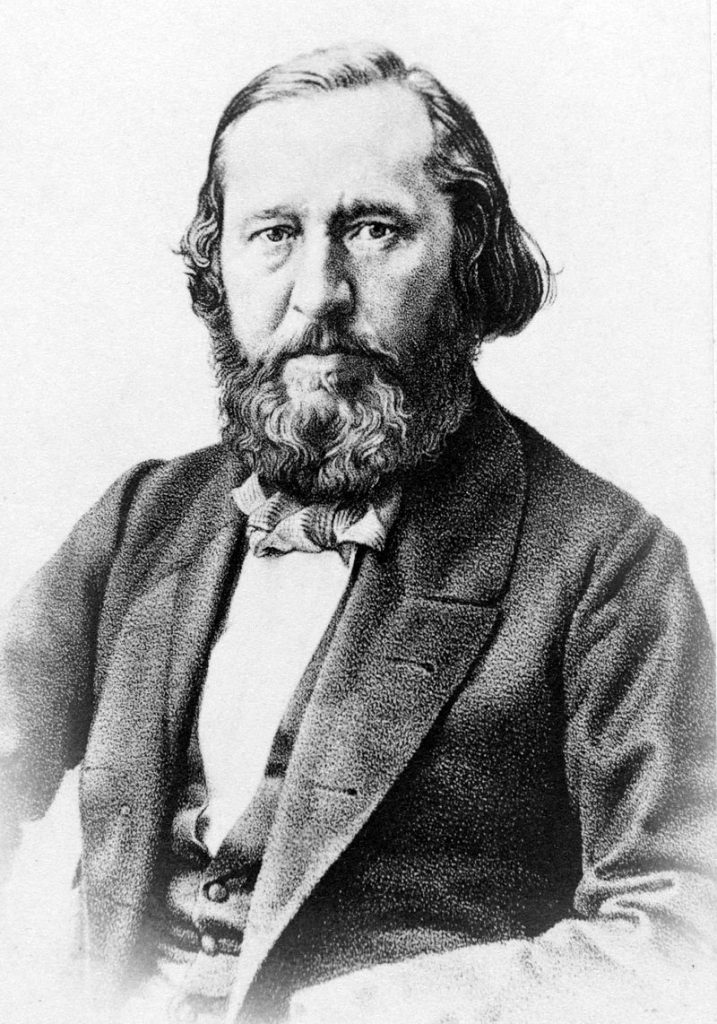
Alexander Nikolaevič Aksakov, born May 27, 1832 in Ripievka, Russia - died January 4, 1903 in St. Petersburg, Russia was a Russian philosopher, journalist, publisher, translator, diplomat and advisor to Emperor Alexander III. He is remembered by the Spiritist Movement as one of the most respected investigators of the spiritual phenomena that characterised Modern Spiritism in the 19th century, having shared studies on the manifestations of Revolving Tables and, especially, of the materialisation of spirits, together with other eminent scientists and the most renowned mediums of his time. He defended his convictions regarding the veracity of spiritist phenomena in works such as Animism and Spiritism - a classic of international spiritist literature. He is credited with the first translations of Allan Kardec's works into Russian.
Aksakof was born into a high-ranking family of Russian nobility, closely related to famous members of Russian literature and science. Studious, he graduated in various disciplines and was a professor at the famous academy in Leipzig, Germany. He was soon to be appointed a diplomat and became one of Tsar Alexander III's closest advisors.
Inclination towards philosophy and spirituality
From his youth, Aksakov already showed a great interest in philosophy and research into things related to the soul and the spiritual world, but always guided by a scientific character. Concerned to better substantiate his convictions, he focused on the historical study of religions, which led him to learn Hebrew, Greek and Latin.
He spent a long time studying the work of the Swedish polymath Emanuel Swedenborg and his spiritual revelations - albeit heavily laden with mystical descriptions. In 1852, at the age of twenty, he summarised this foray and, in French (the language favoured by the thinkers of his time), published A Methodical Exposition of the Spiritual Meaning of the Apocalypse according to the Apocalypse as Revealed.
His initiation into Modern Spiritism came in 1854, when Andrew Jackson Davis' Revelations of the Divine Nature fell into his hands, leading Aksakov to new aspirations and intellectual tendencies, recognising a spiritual world whose reality he no longer doubted.
In 1855, in order to make a complete physiological and psychological study of man, Aksakov enrolled as a free student at the Moscow Medical Faculty, while at the same time expanding his knowledge of physics, chemistry and mathematics. In that period, he received a work by Beecher: ‘Journal of Spiritist Manifestations’ - the first one on this subject that came into his hands and, trying to catch up with the publications on this subject, and to follow, step by step, the spiritist movement in America and Europe, he strengthened his knowledge with all the books on magnetism and spiritism. In the same year, Aksakov began the work of translating the basic works of Allan Kardec into his native language, which served as a legitimate spiritism course.
Spiritism Surveys
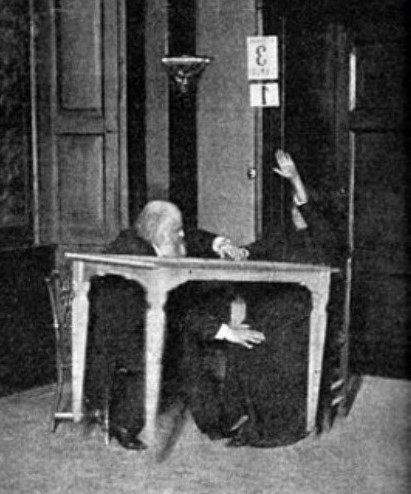
Also in Germany, as a professor at the Leipzig Academy, he founded and edited the journal Psychische Studien [Psychical Studies], while intensifying his practical research, even participating in scientific research commissions on spiritual phenomena, together with other notable scientists, such as William Crookes, Charles Richet, Cesare Lombroso, Ernesto Bozzano, Gabriel Delanne, among others, along with mediumistic experiments through reputed mediums, such as Daniel Dunglas Home, Eusapia Palladino, Elizabeth d'Espérance and Linda Gazzera.
In 1881, Aksakov sponsored the founding and was editor of the weekly Rebus - the first publication of a journal of psychic affairs in Russia.
Spiritist response to the unconscious theory
In 1890, he published ‘Animism and Spiritism’ - which would become a classic of the world's spiritualist literature, having been translated into several languages, including Portuguese (by the Brazilian Spiritist Federation). This book is a compilation of his research and a response to the thesis proposed by the German philosopher Eduard Von Hartmann, in "Der Spiritismus" of 1885, according to which the so-called spiritual phenomena were only ‘expressions of the unconscious’.
Karl Robert Eduard von Hartmann (1842-1906) was a celebrated disciple of Schopenhauer (remembered for his atheistic and pessimistic philosophy) whose ideas served as the basis for Sigmund Freud's psychoanalysis. Von Hartmann's denial of spiritism continued in his 1865 masterpiece, Philosophy of the Unconscious.
Aksakov's refutation of the idea that only the unconscious would create spiritual phenomena was so well founded that the Spiritist Review, October 1895 edition, did not hesitate to say that Animism and Spiritism was ‘Unquestionably the most important and complete work ever written on Spiritism, from the scientific and philosophical point of view’.
In the preface to his work, Aksakov wrote:
"I could do nothing but publicly affirm what I saw, heard, and felt; and when hundreds, thousands of persons affirm the same thing, as to the kind of phenomenon, notwithstanding the infinite variety of particulars, faith in the kind of phenomenon is imposed. I cannot, therefore, regret having devoted my whole life to the acquisition of this objective, albeit by unpopular and illusory ways, but which I know to be more infallible than this science. And if on my part I have succeeded in bringing even one stone to the erection of the temple of the Spirit - which humanity, faithful to the inner voice, builds through the centuries with so much labour, it will be for me the only and highest reward to which I can aspire."
The problem of reincarnation
The spiritist doctrinal principles of the immortality of the soul and the communicability of spirits were well accommodated to the ideas of the Russian sage; however, the same was not true of the Law of Reincarnation. Aksakov even went so far as to claim that such a principle would have been created by Kardec and imposed by him as a dogma, influencing the mediums who lent themselves to the cooperation of the spiritist work; in this sense, he signed the article ‘Investigations into the Historical Origin of the Reincarnationist Speculations of the French Spiritualists’, published in 1875 in the English newspaper The Spiritualist, in which he wrote:
"That the propagation of this doctrine by Kardec was a matter of strong predilection is a fact, and from the beginning reincarnation has not been presented as an object of study, but as a dogma. To maintain that he always had recourse to scribal mediums, who, as is well known, are so easily carried away by the psychological influence of preconceived ideas; and Spiritism engendered this in profusion; and that through mediums of physical effects the communications are not only more objective, but always contrary to the doctrine of reincarnation."
Alexandre Aksakov - The Spiritualist - August 13, 1875
The accusation of the Czar's adviser was basically based on a testimony made to him personally by Célina Japhet, one of the principal mediums who collaborated with the codification of Spiritism, but who had later distanced herself from Kardec - for whom she was sorry, because she hoped to have her name written in The Spirits' Book, in recognition of her mediumistic co-operation. Indeed, the Frenchwoman's resentment moved Aksakov, who fired: ‘Now, is it not surprising that this remarkable person, who did so much for French Spiritism, should be living totally unknown for twenty years, and no news or observation should have been made about her? Instead of being the centre of public attention, she is totally ignored; in fact, she was buried alive! Let us hope that one day a proper reparation will be made. ‘Spiritualism’ may, in this case, offer a noble example for “Spiritism”.
Making the defence of Kardec (disincarnated for six years) regarding the ‘dogma of reincarnation’, Anna Blackwell - the first official translator of the basic works of Spiritism into English - wrote a text entitled ‘The Origin of Allan Kardec's Book of Spirits’ for the same periodical The Spiritualist, for which she was noted:
"In The Testimony of the Centuries, I gave an arm's length list of modern writers who, as forerunners, prepared the way for the fuller presentation of the law of our successive existences which Allan Kardec was employed to elucidate, showing it, no longer as a mere isolated philosophical idea, but as an integral part of the general plan of providential development for all times, worlds and kingdoms. Allan Kardec's special work - as he himself defines it - is that of comparator, collator, compiler; but it presents, in its totality, a philosophical whole, which is recognised as now, original, unique by all who have taken the trouble to see for themselves what it really is."
Anna Blackwell - The Spiritualist - 27 August 1875
Miss Japhet's personal complaints were promptly answered by Pierre-Gaëtan Leymarie (then leader of the Anonymous Spiritist Society), as well as by The Spiritualist, in the article "Reincarnation" of October 8th of the same year.
 English (UK)
  Español
  Deutsch
  Português do Brasil
  Français
  Русский
  Türkçe
  Italiano