José Augusto Faure da Rosa
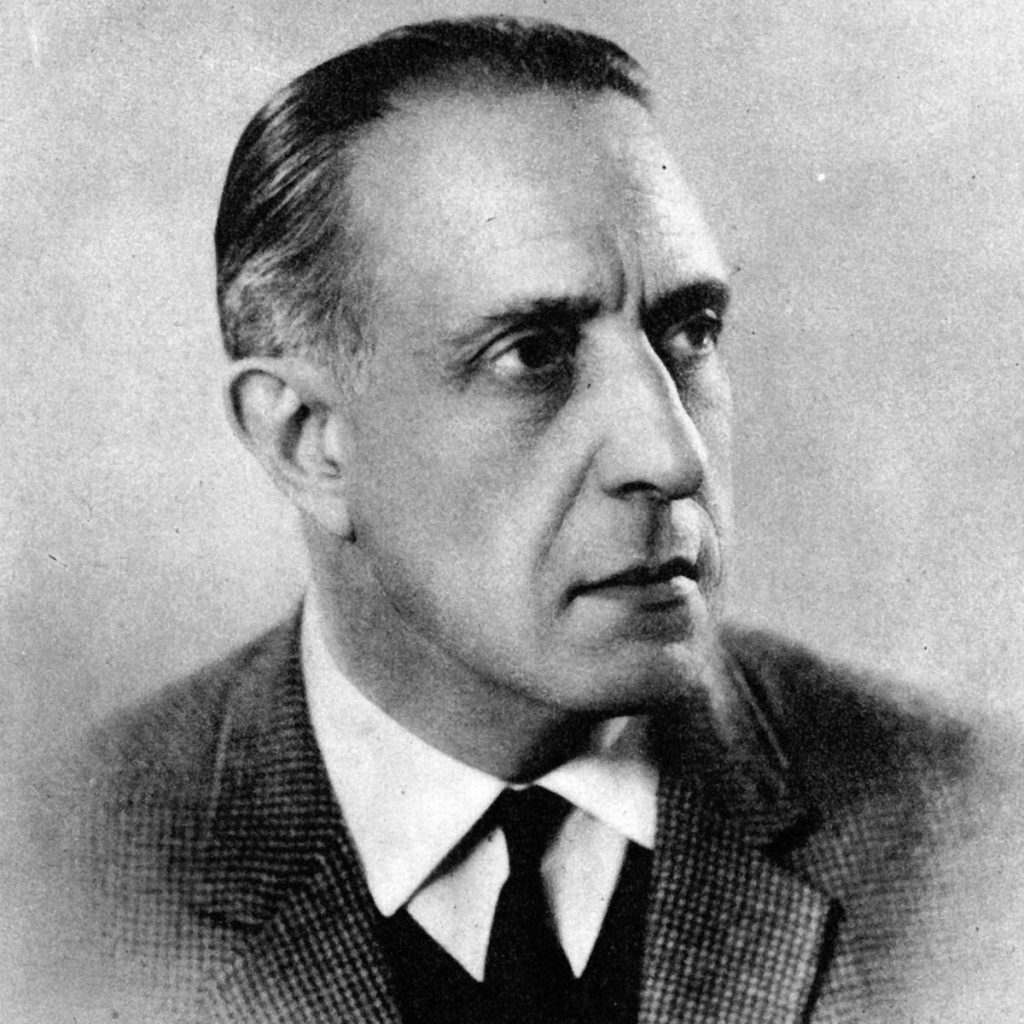
Born in Leiria (Portugal) on 16 November 1873 and died on 8 November 1950.
Colonel José Augusto Faure da Rosa was one of Portugal's most notable spiritists. He attended the Army School and was promoted to ensign in 1897. As well as being a military man, he was a high school teacher, first in Leiria and then in Lisbon. In Lisbon he undertook numerous engagements, devoting himself to journalism and theatre. In collaboration with Henrique Garland, he translated two plays from English, which were performed at the Ginásio Theatre in 1905.
At that time, with five daughters and needing to increase his financial resources, he accepted an invitation to embark for India, where he served for 18 years. There he served in various capacities, including Governor of Daman, Chief of Staff of the Government of India Headquarters, Administrator of the forests of Goa, Praganan and Nagar-Avely and, in the latter territories, Military Commander and Civil Administrator, all of which he carried out with rare judgement and a high sense of responsibility. He carried out with great success essays on rubber cultivation and other important studies, which he bequeathed to posterity in his monographs: ‘Memória da Cultura da Borracha em Goa’ (1908) and ‘Memória da Ensilagem do Capim, em Goa’ ( 1909).
In the Timor campaign, in 1912, he commanded the Western operations column. During his performance in that campaign, he was praised by Commander General Filomeno de Câmara in his ‘Report’, because Faure da Rosa, against superior orders, refused to separate the wives and children of the head of the family among the prisoners, thus revealing a high humanist spirit. He ended his career in the Indian State in 1920, when he returned to Portugal. In 1922 he was appointed Secretary General of the Government of Manica and Sofala and in charge of the government of the same territory, after which, in 1925, he returned definitively to the Metropolis.
As a publicist, his uncommon qualities as a scholar revealed themselves over the next two years, publishing numerous articles on cooperatives, mainly in the newspaper ‘O Povo’. He was awarded the silver medal for Military Valour (with palm), the gold medal for Exemplary Behaviour and other medals for the Timor Campaign. He was a Grand Officer of the Military Order of Aviz. After 1926, he was invited to become Governor General of Angola, which he declined.
The disincarnation of one of his daughters, in 1927, drove him to despair, and he abandoned all his creative activity in the field of co-operativism to devote himself exclusively to the study of Spiritism, to the service of which he put all his intelligence and exceptional dedication. He gave a large number of lectures on the Doctrine of the Spirits, one of which was in response to a Belgian lecturer who gave a talk at the São Luís Theatre. Faure da Rosa's lecture was entitled ‘In Defence of Spiritism’ and was an apotheosis. It was held at the Condes Cinema and the hall was completely packed with illustrious people of the time, doctors, lawyers, engineers, industrialists, merchants, artists and other renowned people.
Francisco de Melo e Noronha wrote about the personality of Colonel Faure da Rosa in a letter read on the occasion of the posthumous homage paid to him on the first anniversary of his death. ‘The homage paid in this helpful and radiant Centre, commemorating the first anniversary of the date on which the lucid Spirit of our distinguished confrere Colonel Faure da Rosa disembodied from his material body, is extremely justified.
I realise that I can define him by echoing Pyrrhus' words on a Roman example: “Ille est Fabricius, qui dificilius ab honestate, quam sob a curou suo, avert potest”. Indeed, worthy of help, the sun would more easily depart from its course than he from the path of honour. He embraced the military career, served his country, in the metropolis and overseas, and, unblemished, always wore his uniform, always respected his soldier's oath. And so he breathed the last breath of his contemporary existence. And so his soul, purified and having pierced the veil, will now be honoured with deserved glory in the ineffable world.
Where, however, Faure da Rosa attained pilgrim proportions and linked his name to an indelible prestige was among us, in this milieu of study and asceticism, in this atmosphere of reason, experience and fraternity. His physiological lines showed the kindness which his manner did not belie, and in this he revealed a fine and meticulous education, which from the beginning of our personal relations aroused my open sympathy.
And when one day, at the exciting invitation of His Excellency, then President of the Portuguese Spiritist Federation, I gave a lecture there, the late Colonel informed me in a previous letter that, in order to prevent my spending the night in the cold when crossing the Tagus, on whose left bank I live, he had fixed an earlier hour than usual, thus making a change of delicate kindness, for which I am very grateful to him. A pre-eminent apostle of Spiritualism, who spoke with courage, vast erudition, impeccable logic and sturdy hermeneutics, it is incontestable that he rendered to the cause truly unusual services, his discourses, addresses and lectures being precious lessons and his printed works magnificent sources of reference.
It can peremptorily be said that Faure da Rosa never wrote about science and conscience. He was exhaustive down to the smallest detail and did not lack elegance in spelling and speech. ‘In a certain way, he shared the character and psychic structure of Allan Kardec, without detracting from the brilliance of his soul and the intrinsic value of his own personality’.
Faure da Rosa was president of the Portuguese Spiritist Federation, a position he held with dignity and efficiency.
 English (UK)
  Español
  Deutsch
  Português do Brasil
  Français
  Русский
  Türkçe
  Italiano