Jerônimo Mendonça Ribeiro

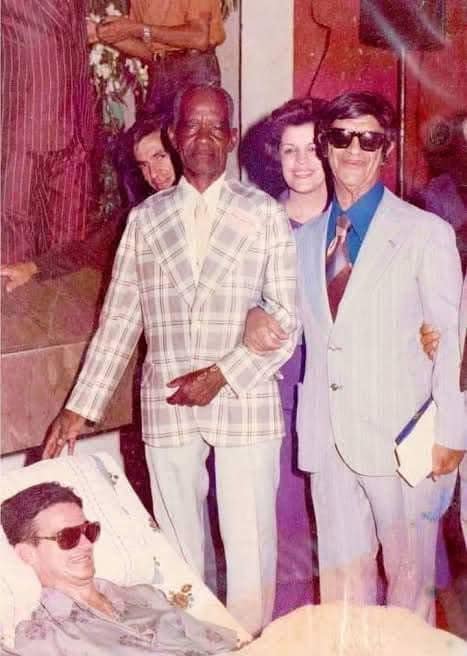
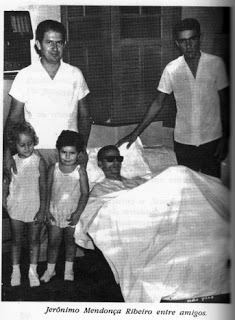
Jerônimo Mendonça Ribeiro was a great spiritist worker, lecturer and writer who, together with his friend Chico Xavier, worked for social causes and the dissemination of the spiritist doctrine. Despite being paralysed in an orthopaedic bed and blind, Jerônimo Mendonça worked hard for the Spiritist ideal, which is why he became known as The Lying Giant.
Life and work
Jerônimo was born in the city of Ituiutaba (Minas Gerais, Brazil) in the midst of a family with great material difficulties and had a normal childhood.
Until the age of 15, Jerônimo he attended the Presbyterian Church, where he gave lectures. However, after the death of his maternal grandmother, he felt the need to learn more about the afterlife. It was then when he met the doctrine spirite, of which he became adept and began to organize meetings and events aimed at the needy.
At the age of 17, when proved to be a good footballer, he began to feel the symptoms of the disease that would eventually immobilised: rheumatoid arthritis. At 19 he began to use crutches and, not to find a cure in medicine, stopped working. So gradually passed to a wheelchair and then to an orthopedic bed. In addition, he was losing his sight and had heart problems. Despite the great difficulties, always kept the mind and advised thousands of people who flocked to him for advice. He traveled around Brazil thanks to a bed anatomically designed for him (orthopedic bed).
He wrote the books: Twilight of a heart, a Wheelchair, Following in the footsteps of an angel, Stairway of light, Of the hand of Jesus and Fourteen years later (coauthored). He left notes that were organized by Maria Gertrudes in the book posthumously FLOWERS DO CORAÇÃO;
He founded the Home Spiritist “Pouso do Amanhecer”, daycare center for underprivileged children in Ituiutaba. Built the Center Spiritist Seareiros of Jesus, the Center Spiritist Manoel Augusto da Silva, in the field, a printing press and a library. After 50 years of fruitful existence, this wonderful man, that I was only doing good to their fellows, desencarnó when I was in pain and did not complain. The giant liar", a nickname that he gave his friends and the press, is the title of the book compiled by Jane Martins Vilela. From it we extract the following text is expressive:
"Imagine, the reader, a man completely paralyzed, bedridden for more than 30 years, without being able to move the neck, blind for twenty years, with terrible pains in the chest, needing the weight of pounds of sand to withstand such pain! This man resigned and serene traveled all over Brazil giving lectures, singing, comforting and guiding hundreds of people."
Trivia
On one occasion, while he was in a movie theater, a girl stumbled to her bed and "exploded": "But, is not possible! Wherever you go, there is the crippled! If I go to a party, there is the cripple. Let this cripple's chasing me! Wherever you go, there you have it!". Jerome thought to himself: "what now? The girl is angry, very nervous. I have to give you an answer, but I don't want to disgustarla even more. What can I say?". And he has got this: "well, my daughter, you will not stay in the house, right?". She looked at him dumbfounded and laughed. They laughed together. They became friends.
The details of his career can be found in his biography JERONIMO MENDONÇA, SUA VIDA E SUA OBRA, written by the medium Maria Gertrudes.
He remained in bed for about thirty years, at a standstill, and with the aggravating circumstance of the loss of sight. Barely slept, and took the opportunity to study a lot of Spiritualism. When he became blind, your friends will read. Never shortage of good friends. But once, a reporter asked what was happiness. He replied: "The happiness for me, lying in this bed for so long without being able to move, would be able to get it on my side". On another occasion, he said: "I got married with the Spiritist Doctrine in terms of civil and pain in religious terms".
Two months before his death, the deceased confrere of Minas Gerais expressed their thoughts on the death penalty, the faith, the pain, the experience of the Gospel, addictions, and happiness.
Interview with Jerônimo Mendonça
Two months before his death, in September 1989, Jerônimo was in Votuporanga, in the interior of the state of São Paulo, to give a lecture at the Center Spiritist Emmanuel, and in the Center Spiritist Humberto de Campos, when we are granted the following interview:
– Jerônimo, in the brazilian society in general there is a great discredit to the government, hopelessness in the box social and indifference in the treatment of the values of noble life. Why is this happening?
Jerônimo Mendonça – Without a doubt, is the result of a transition that the planet itself is living. And Brazil could not be different, given the circumstances, the evidence that all we have to go still. But we have to believe in a better tomorrow, trust the people who are truly good to know that all this will pass, leaving us the beneficial results of an experience. In the end, life is a permanent school examples constants, and the spiritualists have to see this transition with the eyes of the optimism positions in the future. Today there are difficulties, setbacks, investment securities, violence and hate, but tomorrow will reign peace and hope. Whether we like it or not, Brazil will be the Heart of the World and the Homeland of the Gospel.
– Never has so much been spoken of the death penalty in Brazil as it is today. There is the movement of pressure, which call for the death penalty for the more serious offenders. How do you see?
JM – we Know perfectly well that the violence is not extinguished by the violence. It is as if we tried to put out a fire by throwing firewood. For us, the death penalty would be a backward step, especially for us, brazilians, that we are a peaceful people by nature. And one of the commandments of the Law of God is very clear and imperative: 'thou shalt Not kill". So the violence will not solve the problem of violence. Let us pray that this process of obsessive ideas not reach the emotions and the reason of the people, because, despite all the sorrows, love is the great way to human happiness.
– How should position themselves christians who really want to contribute to the establishment of a new social order on Earth?
JM – Compliance with dignity with our duties. Being faithful to our principles, with greater spirit of detachment and self-sacrifice for the cause of human and social. Knowing that the disciple of today should reflect the living portrait of the Master of all time, who knew that the most perfect form of joining with God and perfect happiness is through the call of duty. Each one of us to know his duty in his job, and that is the result of the victory.
– Jerome, if we already have news of the essential teachings of Jesus, why is it so difficult to live this out?
JM – It's because we have the Gospel more in the mind than in the feelings. Still lives in the mental sphere, in the reasoning, within the heart as a renewal. But there will come a time that all of us, looking at the panorama of the past, to those true souls who did everything to establish the nascent christianity, supporting fires, wild animals and so many calamities that history records, we can look at ourselves in the mirror of the past in order to have the spiritual dignity of the present and give witness of Jesus in all aspects of life.
– Is the pain and the suffering are the creations of God?
JM – Never. God, in his infinite perfection and goodness, never would create suffering for their children. Suffering and pain are deviations from the free will of man over the millennia. The whole attitude of our contrary to the laws of love of our Father means suffering in us. God will never punish humanity with the hunger, the misery, the pain and physical pain with moral. It is we who have created this karmic situation. All sowing wrong leads to a harvest crooked.
– Jerome, what could you say to the parents who, out of desperation, they notice that their children pass through the dark paths of life, lost in fantasies and addictions?
JM – More love to these children, more understanding of the difficulties and psychological processes obsessive who sometimes govern the young minds. The Spirit returns to the reincarnation bringing with trends which are not resolved in the past and sometimes it doesn't find a home that is so well structured evangelically; so in place of that these tendencies are opposed, are fed by the examples still defective of their own spiritual guardians. For this reason, patience, faith, and a lot of self-denial, a lot of capacity to forgive and to hand them over to God, without leaving the boat in the lurch.
– Jesus said that those who had faith the size of a grain of mustard seed, you could upload mountains. We ask ourselves: What does it mean to have faith?
JM – The faith, according to the Spirit Emmanuel, is a vision of life, the logic of life itself. The farmer knows that the seed is the embryo of the tree in the morning, but if you don't have faith in your own certainty that the planting gives, that seed will remain just an embryo. So faith doesn't come by osmosis, it is a conquest made by each person in time and space, and within the Spiritist Doctrine of this faith loses its mystical character to become a faith is eminently rational. Is to know where we come from, what we do, what is life and where we are going. Is to have a sense of direction and path: this is the faith.
– Jerônimo, how can we find the happiness we yearn for?
Jerônimo Mendonça – happiness is sharing, love is fusion. No one can be happy in selfishness, in the exclusivism, in the marginalization of a situation, whatever it is. Happiness is participation, is to improvise the happiness of others, because it is giving as it is received.
Jerônimo Mendonça Ribeiro desencarno on November 26, 1989 in Ituiutaba – Minas Gerais.


 English (UK)
  Español
  Deutsch
  Português do Brasil
  Français
  Русский
  Türkçe
  Italiano