Guilherme Taylor March
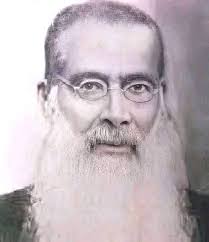
On the plateau of the Serra dos Órgãos, where today is located the city of Teresópolis, state of Rio de Janeiro, was born on August 21 1838, the child Guilherme Taylor March. He was the son of a citizen English George March, born and raised in Portugal, and Ignácia March, a brazilian of african descent. The firstborn son of this couple, six years older than William, was called George Brittain March. The names Brittain and Taylor paid homage to their respective godfathers, according to the custom of the time. So, Guilherme was godson of vice admiral John Taylor, a friend of his father, who had accompanied him to Brazil to admiral Cochrane, commander during some years of the imperial fleet in brazil. His father acquired a sesmaría, intended for the breeding of race horses and the cultivation of cereals. The property was renamed the Fazenda of March, giving rise to the city of Teresópolis.
George March should be in the habit of summering in the sierra. I used to organize parties and picnics in the summer, inviting her many friends who were suffering from the heat and dust of the court. After the death of George March, their children were left at the mercy of the uncertainties of the target, since his mother had died before his father, although he had bequeathed a considerable fortune. The first-born, 18 years of age, would take care of their own interests. The small Guilherme, of 12 years, he was assigned to a guardian, who spared no effort in their education. Internship in the College of Parents Paiva, Rio de Janeiro, and later enrolled at the Faculty of Medicine of the Court, he finished the race with brilliance in 1859. After he graduated, he learned that it was poor: its vast and rich properties had passed to other hands, and had no bank deposit on your behalf. He attributed what happened to the unfortunate business undertaken by his guardian.
This disappointment would be for many a misfortune irreparable, enough to annihilate the mind of a young man who had come into the world surrounded by material goods, which had been deprived of the loving mother when he was still a child, and still a chick, had lost his father. Now, when they reach the age of majority and get control of your own life, you are alone and empty-handed for the start of the trip. However, it was strong and did not let himself be intimidated by the hardships of life. Did the professional title with which he could earn the bread of each day? So that is launched to work with faith and courage. Dr. March began his career as a homeopathic doctor. It is important to clarify why you are interested in this system of healing, harassed in the medical circles of the time. When I was in the last year of medicine, lived in a boarding house and contracted smallpox. Therefore, you would have to be moved to a hospital. To avoid this, the owner of the board, spiritualist convinced, with your consent, hiding him in a room away from the house and took charge of his treatment, medicándolo with homeopathy, without medical assistance.
The adherents of spiritualism practiced freely homeopathic medicine, without persecution on the part of the medical authorities, probably because it did not fear the competition of a therapy that until then was considered harmless. After being cured without sequelae, the young student felt sympathy for the science of Hahnemann, and soon he began to study it with determination and dedication. Once graduated, adopted homeopathy as a clinical practice, whose effectiveness had been proven. For the sake of the profession, as soon as it came into contact with the misery and suffering, he could see clarities divine balm to the wounds that plagued the bodies, the souls and the hearts, understanding that the true God was completely alien to the one I had known in school. The divine justice had based the diversity of man's destiny in powerful reasons that corresponded to the interests of each one of them. Where to find an explanation philosophical of these truths?
She had nine children: seven boys and two women. He was doctor in the homeopathic consultation of the Holy House of Mercy, without pay, and then a salaried with fifty thousand réis per month. Given his dedication to the cause of charity, and his spirit of renunciation, getting low-income in his own clinic, and a large part of them went to help the less fortunate. Their economic situation was exacerbated by another insidious disease that had affected in his youth, and began to limit their movements. It was then when there was a social phenomenon: the people, to see him as a missionary of the good in difficulties, came to her aid. The population of Niterói, purchased by public subscription, the building of the street Santana 14, today Benjamim Constant, and donated to the great philanthropist. To take possession of the house, opened its doors to the disinherited of the luck could enter freely. He used to say: "This house is not mine, but of all those who do not have a roof".
With the disease moving forward inexorably, ministered to the patients in his room sick. His wife and his family and manipulated recipes homeopathic and distributed free of charge. The poor patients who came from the towns of the interior were spending the night in the house of the doctor, humanitarian, whose doors are never closed and locked. Were 63 years of medical activity, with an unparalleled dedication. He renounced all material interest, and devoted himself day and night, without fatigue or rebellion, to the sublime task of relieving the suffering of others. He was nicknamed "Father of the Poor". Who saw him hunched up by the physical suffering, drying up the tears of patients, could say: "What man so strange, that they forget their own pain to relieve the others. You may be a saint...". His family, however, knew that it was a simple spiritualist, who is trying to fulfill the recommendation of the Divine Physician: "Love one another as I have loved you."
Dr. March said goodbye to the physical life on 21 June 1922, after 84 years of life, hard-working, dedicated entirely to the good and to the fraternity. The people came out in mass and took his casket in the arms to the cemetery of Maruí, where he was buried amid the flowers and tears. The public authorities covered the expenses of the funeral in recognition and tribute to the humility and poverty of the man who had betrayed his fellows. The O Fluminense newspaper published on June 22, 1922 an article entitled "The end of the existence of a benefactor of humanity."
The city of Niterói perpetuated his memory by giving his name to a public way. The Federation of Spiritualist of the State of Rio de Janeiro, founded and maintained by the Institute, Dr. March, a day care that serves about 200 children in need, from two to six years. It is interesting to note that the life of Dr. March has a remarkable analogy with the Dr. Bezerra de Menezes. Both were doctors homeopaths; participated in the political life, elected councillors for the Liberal Party, at different times, and at the beginning of his professional life; professed to spiritualism; were poor, and they devoted their lives to the sick and disadvantaged. Like Dr. Bezerra de Menezes, Dr. March, with his life of renunciation and sacrifice, and knew how to honour the Medicine and the Doctrine Spirite, as a true Apostle of the Well.
 English (UK)
  Español
  Deutsch
  Português do Brasil
  Français
  Русский
  Türkçe
  Italiano