The future and the nothing
From the book: Heaven and the Hell – Allan Kardec
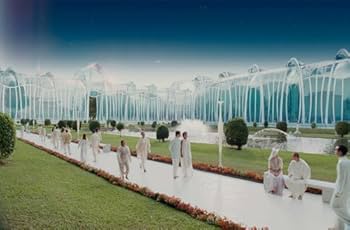
We live, we think, we act: this is positive. We die: this is no less true. But when we leave the earth, where do we go, what do we become, will we be better or worse, will we exist or not? To be or not to be, that is the alternative. To be forever or never to be again; all or nothing. We will live forever or it will be over forever. It is worth thinking about.
All men experience the need to live, to enjoy, to love, to be happy. Tell him who knows that he is going to die that he will go on living, that his hour has been postponed; tell him above all that he will be happier than he has ever been, and his heart will beat with joy. But of what use would these aspirations of happiness be if a faint breath could cause them to vanish?
What could be more despairing than the thought of absolute annihilation? Precious affections, intelligence, progress, hard-won knowledge, all would be destroyed, all would be lost! What need would there be to strive to be better, to repress our passions, to enlighten our spirit, if no fruit were to be reaped from all this, and, above all, if we thought that tomorrow, perhaps, it would no longer be of any use to us at all? If this were so, man's destiny would be a hundred times worse than that of the irrational, because they live exclusively in the present, with a view to the satisfaction of their material appetites, without any aspirations for the future. A secret intuition tells us that this is not possible.
Because of the belief in nothingness, man necessarily concentrates all his thoughts on the present life. Indeed, it would be illogical for him to worry about a future from which he expects nothing. This exclusive preoccupation with the present naturally leads him to think of himself above all else. It is, then, the most powerful incentive to selfishness, and the unbeliever is consistent with himself when he comes to the following conclusion: let us enjoy ourselves while we are here, let us enjoy ourselves as much as possible, for with death everything is over; let us enjoy ourselves quickly, for we do not know how long we shall be alive. The same is true of this other conclusion, which is even more serious for society: let us enjoy ourselves in spite of everything; everyone for himself; happiness in this world belongs to the most astute.
If human respect serves as a restraint for some people, what restraint is there for those who fear nothing? The latter believe that human laws reach only fools, which is why they use all their talents to find the best means of evading them. If there is a harmful and anti-social doctrine, it is undoubtedly nothingism, because it destroys the true bonds of solidarity and fraternity on which social relations are founded.
In these circumstances spiritism comes to put a dam against the encroachment of unbelief, not only by reasoning and the prospect of the dangers of unbelief, but by material facts, which enable one to see and touch the soul and the future life.
The spiritism doctrine of the future is not a work of the imagination conceived with relative ingenuity, but the result of the observation of material facts now unfolding before our eyes, so that it will, as is already the case, bring together divergent or wavering opinions, and, by the force of things, will gradually lead to a unity of belief on this point.
 English (UK)
  Español
  Deutsch
  Português do Brasil
  Français
  Русский
  Türkçe
  Italiano