Amélie Gabrielle Boudet
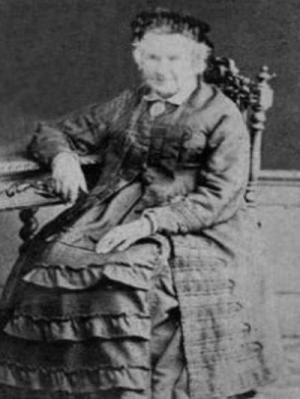
Amélie Gabrielle Boudet was born in Thiais, a town located 12 kilometres from Paris, on 23 November 1795. The only child of Julien Louis Boudet and Julie Louise Segneat de Lacomb, Amélie combined great vivacity with a strong interest in her studies from an early age, receiving a refined moral education that gave her highly developed intellectual abilities. She graduated from a teacher training college in Paris as a first-class teacher and, according to Canuto Abreu in ‘The Spirits' Book and its Historical and Legendary Tradition,’ she was also a teacher of literature and fine arts. She wrote three works: Contos Primaveris (Spring Tales, 1825), Noções de Desenho (Notions of Drawing, 1826) and O Essencial em Belas Artes (The Essentials of Fine Arts, 1828).
Living in Paris, in the world of literature and teaching, fate would have it that one day Miss Amélie Boudet would meet Professor Hippolyte Léon Denizard Rivail. She soon caught his attention with her tender and kind smile, her kindness and grace. The wedding took place on 6 February 1832, reaffirming a love from past lives and mutual commitments to help one another. Professor Rivail founded the Technical Institute in Paris. Amélie accompanied him during this difficult period in French education: primary education at the time did not receive government support, which only changed in 1833. Two years after its foundation, the Institute closed its doors due to financial difficulties and went into liquidation. Kardec was left with debts to pay, which he did with nobility.
Like all great women, Amélie stood by her husband. While Rivail took care of the accounts for businesses and translations, she, aware of her husband's generous heart and concern for the education of children and young people, helped to prepare free courses, taught in the couple's own home in the evenings, which ran from 1835 to 1840. Madame Rivail, in addition to being an advisor, was the inspiration behind several projects that her husband carried out. Leymarie, who was a close friend of the couple, stated that the professor held his wife's opinions in high regard.
Thanks to their joint efforts, they achieved a satisfactory financial position. But there was a much greater mission destined for these two hearts that loved each other and loved humanity. The call came in 1854, with the phenomenon of table turning, which Rivail began to observe and investigate. Amélie then became her husband's secretary, supporting him in the new and arduous mission of codifying the Spiritist Doctrine, encouraging and cheering him on. After the launch of ‘The Spirits' Book’ on 18 April 1857, signed as Allan Kardec, well-attended sessions were held in the couple's apartment, which required Madame Rivail to provide a series of care and attention that sometimes left her exhausted.
Kardec said of her: (...) My wife (...) fully supported my intentions and assisted me in my laborious task, as she continues to do, through work that often exceeds her strength, willingly sacrificing the pleasures and distractions of the world to which her family position had accustomed her. For thirty-seven years she was her husband's faithful companion, accompanying him on his travels whenever her strength permitted.
Kardec's discarnation did not affect the hard-working and virtuous spirit of Madame Rivail, who, despite her advanced age, managed the resources, properties, and works of which she was the sole owner. Her commitment motivated the continuation of the doctrine. With selflessness and devotion, she founded the ‘Society for the Continuation of Allan Kardec's Spiritist Works,’ dedicated to spreading Spiritism by all possible means. Thus, the Revue Spirite continued to be published, as did Kardec's other works and all the books of the Spiritist Doctrine.
During the Spiritists' Trial in 1875, which brought spiritism before the courts, she was called to testify. Treated disrespectfully by the judge, she responded firmly to the questions and defended Kardec's memory. It was another painful testimony she had been called upon to give.
At around five o'clock in the morning on 21 January 1883, calmly and with the sweet smile that always graced her lips, Allan Kardec's great successor bid farewell to her body. She was buried on the 23rd, next to her husband's dolmen. Among those who spoke at the memorial service were Leymarie and Gabriel Delanne, all of whom highlighted the true merits of Allan Kardec's successor. Mr. Lecoq also read a mediumistic communication from Anthony of Padua, received on 22 January, in which he described the brilliant reception of Amélie by Allan Kardec and his exalted friends in the Spiritual World.
 English (UK)
  Español
  Deutsch
  Português do Brasil
  Français
  Русский
  Türkçe
  Italiano