Resignation in the face of Adversity
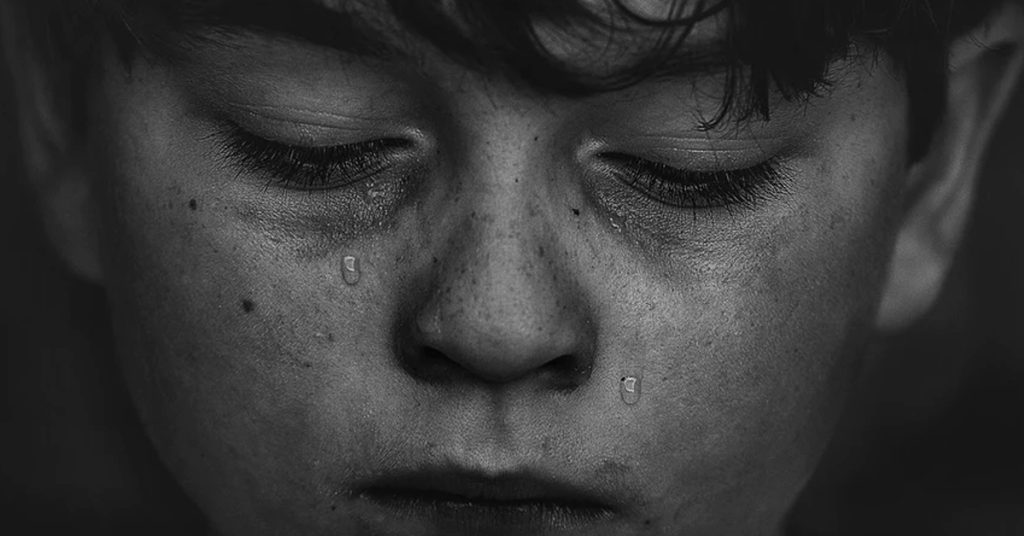
Suffering is a law of our world. In all conditions, in all ages, under all climates, man has suffered and also cried. Despite the moral progress, thousands of Beings still bow under the weight of pain. The higher classes are not free from evils. In the cultured Spirits, the most awakened and exquisite sensitivity leads to more vivid impressions. The rich, like the poor, suffers in his flesh and in his heart. From all different points of the globe, human lamentation rises towards Space.
Even in the bosom of abundance, a feeling of overwhelming, a vague sadness sometimes takes hold of delicate souls. They understand that happiness is unattainable on Earth and only shines with fleeting fleas. The Spirit aspires to better lives and worlds; a kind of intuition tells him that the Earth is not everything. For the man fed by the Philosophy of the Spirits, that vague intuition is changed into certainty. He knows where he goes and knows the reason for his ills and the reason for suffering. Beyond the shadows and the anguish of the earth, glimpse the dawn of a new life.
To weigh the goods and evils of existence; to know what happiness and true misery are, one must rise above the narrow circle of earthly life. The knowledge of future life and the fate that awaits us in it enables us to measure the consequences of our actions and their influence on our future.
Seen from this point of view, the disgrace for man will no longer consist in suffering, loss of grief, deprivation and misery; it will consist in everything that blemishes him, makes him small or obstructs his progress. The misfortune, for which only considers the present, can be poverty, illnesses or illness. For the Spirit unbound from Above, it will be love of pleasure, pride and a life useless and guilty. One cannot judge a thing without seeing all that is derived from it, and therefore no one will understand life if he does not know its purpose and its laws.
The sufferings, by purifying the soul, prepare its elevation and happiness, while the pleasures of this world, the riches and passions weaken it and provide bitter disappointments in the next life. Thus, the one who suffers in his soul and in his body, he whom adversity overwhelms, can wait and raise his confident gaze towards this Heaven; he pays his debt to destiny and conquers his freedom. On the contrary, he who is pleased in sensuality forges his own chains, accumulates new responsibilities that will weigh heavily on his future days.
The pain, in its multiple forms, is the supreme remedy for imperfections and ailments of the soul. Without it, there is no healing possible. Just as organic diseases are often the result of our excesses, so the moral sufferings that attack us are the result of our past failures. Sooner or later, these faults fall upon us, with their logical consequences. Such is the law of justice and moral balance. Let us accept its effects, as we accept the bitter remedies, painful operations, which will restore health and agility to our body. Even when sorrow, humiliation and ruin overwhelm us, we endure it with patience. The farmer tears the bosom of the earth to make the golden harvest sprout from it. Thus, from our broken soul will arise a moral harvest.
The action of pain separates from us what is impure and evil: gross appetites, vices, desires, everything that comes from the earth must return to the earth. Adversity is the great school, the fertile field of transformations. Thanks to his teachings, the bad passions are gradually turned into generous passions, in love of good. Nothing is lost. But this transformation is slow and difficult. Suffering, the constant struggle against evil, self-sacrifice can only accomplish it. With them, the soul acquires experience and wisdom. The green and acidic fruit that this soul was, is changed under the waves of suffering, under the rays of the divine sun, into a sweet fruit, fragrant and ripe for the higher worlds.
Only the ignorance of universal laws makes us accept our evils with disgust. If we understood how necessary these evils are for our advancement, if we knew to taste their bitterness they would not seem a heavy burden. We all hate pain, and only understand its usefulness after we have left the world where pain exerts its empire. His work is fruitful, however. It makes fruitful in us treasures of piety, tenderness and affection. Those who never knew him are worth little. The surface of their souls is barely unbrushed. Nothing is deep in them: neither feeling nor reason. As they did not endure suffering, they remain indifferent and insensitive to others.
In our blindness, we curse our dark, monotonous and painful lives; but when we lift our eyes above the limited horizons of the earth; when we have discerned the true reason for life, We understand that these lives are precious and indispensable to dominate the proud spirits, to submit ourselves to this moral discipline, without which there is no progress.
Free in our actions and free from evils and worries, we would let ourselves be carried away by the raptures of our passions and by the impulses of our character. Far from working on our improvement, we would only add new faults to our past faults, while, compressed by suffering in humble existences, we get used to patience and reflection, We provide that unique calm of thought which allows us to hear the voice of the high, the voice of reason.
In the crucible of the pain is where great souls are formed. Sometimes, before our eyes, angels of goodness come to empty the chalice of bitterness, in order to set an example for those who are exalted by the torment of passions. Suffering is the necessary reparation, knowingly accepted by many of us. May this idea inspire us in the moments of discouragement; may the spectacle of the evils endured with a touching resignation give us strength to remain faithful to our own commitments, to the virile resolutions adopted before the return to the flesh.
The new faith has solved the problem of purification through pain. The voice of the Spirits encourages us in difficult times. The same ones who endured all the agonies of earthly existence tell us today: "I have suffered, and I have only been happy with my sufferings. I have rescued many years of luxury and millefick. Suffering has taught me to think and pray; in the midst of the intoxications of pleasure, never had healthy reflection penetrated my soul, never had prayer grazed my lips. ¡ Blessed are my sufferings, since at last they have opened the way that leads to wisdom and truth!" (Mediumistic communication received by the author.)
¡Behold, the work of suffering! Is it not the greatest of all those which are performed in mankind? It is being pursued in silence and secrecy, but its results are incalculable. Separating the soul from all that is low, material and transient, it rises and is oriented towards the future and the higher worlds. He speaks of God and eternal laws. Indeed, it is beautiful to have a glorious end dying young while fighting for one’s own country. History records the names of heroes, and generations pay to their memory a just tribute of admiration; but a long life of sufferings, of patiently endured pains is even more fruitful for the advancement of the Spirit. History will not speak of it, no doubt. All these dark and silent lives, lives of silent struggle and recollection, fall into oblivion; but those who performed them found in the spiritual light their reward. Only pain softens our heart and kindles the fire of our soul. It is like scissors that give its harmonic proportions, fine-tune its contours and make it shine in its most perfect beauty. A slow and continuous work of sacrifice produces better effects than an isolated sublime act.
Console yourselves, all of you, ignorant who suffer cruel evils in the shadow; and you, whom are despised for your ignorance and for your restricted faculties. Know that among you are great spirits who wanted to be reborn ignorant to humble themselves, abandoning for some time their brilliant faculties, abilities and talents. Many intelligences are veiled by atonement; but, at the moment of death, those veils fall, and those who were despised for their little knowledge, eclipse the proud ones who rejected them. No one to despise. Under humble and petty appearances, and even in the idiots and fools, great spirits hidden in the flesh expiate a fearful past.
¡Oh, humble and painful lives, soaked in tears and sanctified by duty; lives of struggles and renunciations; lives of sacrifice for the family, for the weak and the humble; unknown altruisms, ignored abnegations, more worthy than the celebrated sacrifices!... You are on the steps that lead to the soul to happiness... To you, to the obstacles and humiliations of which you are subject, is owed its purity, strength and greatness. Only you, in the daily anguish, in the immolations imposed, manifest patience, determination, constancy and all the sublimity of virtue, and it will give you the splendid aureole promised in Space for the fronts of those who suffered, fought and won.
If there is a cruel test, it is the loss of loved ones, when, one after another, they are seen to disappear, snatched by death, and loneliness forms gradually around us, full of silence and darkness.
These successive escapes from all those who were dear to us are solemn warnings; they tear us away from our selfishness; they reveal the childishness of our material concerns and our earthly ambitions, and invite us to prepare for the great journey.
The loss of a mother is irreparable. ¡ What a void is formed around us when this friend, the best, the oldest and the surest of all, descends to the tomb! The May the eyes that looked at us with love be closed forever! May the lips that have so often been on our foreheads cool down!... Is not the love of a mother the purest and most selfless thing . What is there? Is it not like a reflection of God’s goodness?
The death of our children is also a source of bitter sorrow. A parent could not see the disappearance of his or her loved one without experiencing a tear. In those desolate hours, the Spirit Philosophy offers us great help. To our sorrows, to our pain at seeing so soon a life full of promises broken, he responds by saying that an early death is often a good for the Spirit who leaves and is emancipated from the dangers and seductions of the earth. This life so short for us unexplainable mystery had its reason. The soul entrusted to our care and tenderness came to complete what had been insufficient for her in a previous incarnation. We only see things from the human point of view, and that is where our mistakes come in. The stay of those children on Earth would have been useful to us. It would have given birth in our hearts the holy emotions of fatherhood, delicate feelings hitherto unknown to us that soften and make man better. It would have formed, from us to them, bonds powerful enough to unite us to that Invisible World which will bring us all together. Because that is the beauty of the Doctrine of the Spirits. With it these beings are not lost for us. They leave us for a moment, but we are destined to meet them.
What do I say? Our separation is only apparent. Those souls, those children, that beloved mother are by our side. His fluids and thoughts envelop us: his love protects us. We can even, sometimes, communicate with them and receive their encouragement and advice. Their affection for us has not faded. Death has made him deeper and more enlightened. They exhort us to set aside from us that vain sadness, those sterile sorrows whose spectacle makes them unhappy. They beg us to work with courage and perseverance in our improvement, so that we may meet them again and join them in the spiritual life.
To fight against adversity is a duty; to abandon oneself, to be carried away by laziness, to suffer without reacting to the evils of life would be cowardice. The difficulties we have to overcome exercise and develop our intelligence. However, when our efforts are superfluous, when the inevitable stands in our way, the time has come to call for resignation. No power could remove from us the consequences of the past. To rebel against the moral law would be as foolish as to seek to resist the laws of distance and heaviness. A fool may try to fight against the immutable nature of things, while the sensible Spirit finds in suffering a means of comfort and strengthening his manly qualities. The intrepid soul accepts the evils of destiny; but, with thought, it rises above them and makes of them a pedestal to reach virtue.
The cruelest and deepest afflictions, when accepted with the submission which assumes the consent of reason and heart, generally indicate the end of our woes, the payment of the last fraction of our debt. It is the definitive moment when it is important to stand firm, to summon all our resolution and our moral energy, in order to emerge victorious from the trial and to reap its fruits.
Often, in difficult hours, the thought of death comes to visit us. It is understandable to ask for death, but it is not really desirable until after we have triumphed over all our passions. Why should we desire death if, not being cured of our vices, we still need to purify ourselves by painful reincarnations? Our faults are like the robe of the centaur clinging to our Being, and from which only repentance and atonement can free us.
The pain always reigns as sovereign in the world and, however, a careful examination would show us with how much wisdom and with what foresight the divine will has graduated its effects. From stage to stage, Nature is moving towards a less ferocious, less violent order of things. In the earliest ages of our planet, pain was the only school and the only stimulus for beings. But, little by little, the suffering is lessened: the terrible evils, the plague, leprosy and hunger, once permanent, have almost disappeared. Man has mastered the elements, has approached distances and conquered the earth. Slavery no longer exists. Everything evolves and progresses. Slowly, but surely, despite the setbacks inherent in freedom, humanity improves. Let us have confidence in the directing Power of the Universe. Our limited Spirit would not know how to judge all its means. Only God has the exact notion of this rhythmic cadence, of this necessary alternative of life and death, of night and day, of pleasure and pain, from which happiness and elevation of Beings are finally released. Let us leave it to him, then, to fix the time of our departure, and wait for it without wishing or fearing it.
At last the way of suffering is travelled; the righteous understand that the end is near. The things of the earth pale more and more before his eyes. The sun seems cloudy, the flowers colourless and the road more stony. Full of confidence, he sees death approaching. Is it not the calm after the storm, the port after a stormy crossing?
¡How great is the spectacle offered by the resigned soul, rushing to leave the earth after a painful life! He turns a last glance to his past; he sees, in a kind of gloom, the disdainful sufferings suffered, the restrained tears, the drowned groans, the suffering endured briefly. He feels the bonds that bound him to this world gently released. He will abandon his body of mud, he will leave far away from if all material servitude. What could I fear? Has he not tried his self-denial, has he not sacrificed his interests to truth and duty? Has he not drunk to the last cleansing cup?
See also what awaits him. The fluid images of his acts of sacrifice and renunciation, his generous thoughts have set bright milestones that point the way to his ascension. Such are the treasures of his new life. He discerns all this, and his gaze is lifted even higher up, to the Height that only rises with light on the forehead and love and faith in the heart.
Before this spectacle, a heavenly joy penetrates him; he almost regrets not having suffered enough. A last prayer, like a cry of joy, springs from the depths of his Being and ascends to his Father, to his beloved Master. The echoes of space repeat that cry of liberation, to which are joined the accents of happy spirits who crowd in crowds to receive him.
León Denis – The Straight Path ┃ Spiritist concept of moral law
 English (UK)
  Español
  Deutsch
  Português do Brasil
  Français
  Русский
  Türkçe
  Italiano