Pride. Wealth and Poverty
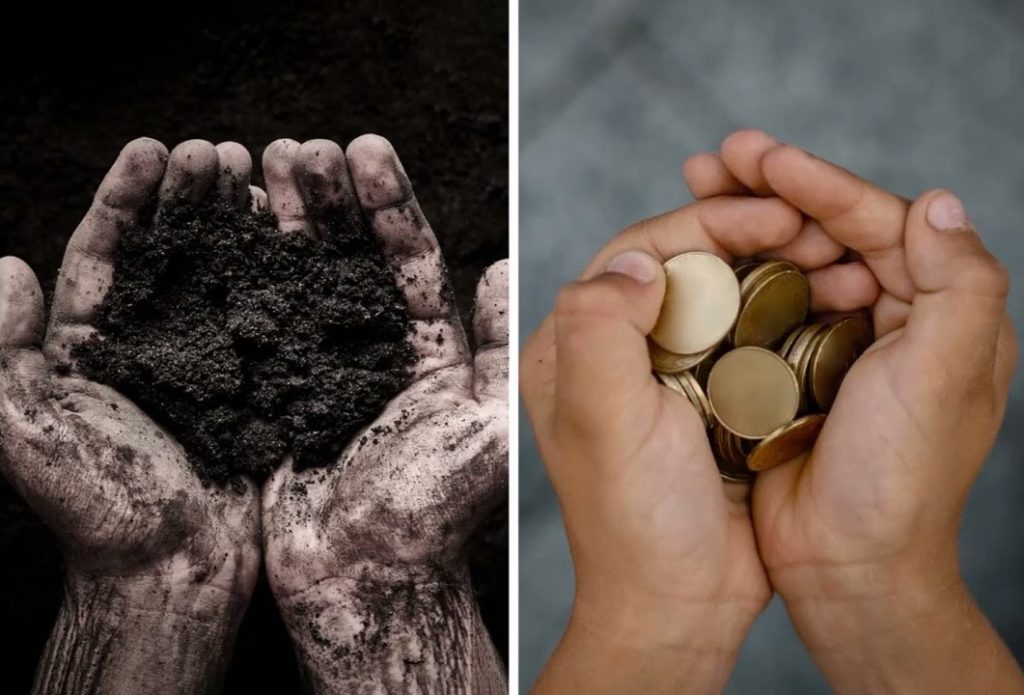
Of all the vices, pride is the most dreadful, for it sows behind it the seeds of almost all the other vices. As soon as it has penetrated a soul as if it were a conquered square, it takes possession of it, adapts itself to its liking, and fortifies itself in it to the point of becoming impregnable. It is the monstrous hydra that is always pregnant and whose offspring are monsters like itself.
Woe betide the man who has allowed himself to be taken by surprise! He can free himself only at the cost of terrible struggles, of painful sufferings, of dark existences, of a whole future of debasement and humiliation, for this is the only effective remedy for the evils that pride engenders.
This vice is the greatest scourge of humanity. It is the source of all the divisions of social life, of the rivalries of classes and peoples, of intrigues, hatred and war. Inspirer of mad ambitions, he has covered the earth with blood and ruins, and it is also he who causes our sufferings beyond the grave, for his effects extend beyond death to our distant destinies. Not only does pride divert us from the love of our fellow men, but it makes all improvement impossible, abusing our courage and blinding us with our faults. Only a rigorous examination of our actions and our thoughts will enable us to reform ourselves. But how would pride submit itself to such an examination? Of all men, the proud man is the one who can know himself the least. Infatuated with his own person, nothing can disillusion him, for he carefully keeps aside everything that can enlighten him; he hates contradiction, and delights only in the society of flatterers.
Like a gnawing worm in a good fruit, pride corrupts the most meritorious works. Sometimes it even makes them detrimental to those who perform them. The good, done with ostentation, with a secret desire to be applauded and glorified, turns against its author. In the spiritual life, the intentions, the hidden motives that inspire us reappear as witnesses, overwhelm the proud and reduce their illusory merits to nothing. Pride hides the whole truth from us. To study the Universe and its laws fruitfully, one needs, first of all, simplicity, sincerity, uprightness of heart and intelligence, virtues unknown to the proud. The idea that so many Beings and so many things dominate us is unbearable to him, and he rejects it. His judgements have for him the limits of the possible; it is difficult for him to admit that his knowledge and understanding are limited.
The simple man, humble of heart, rich in moral qualities, will sooner arrive at the truth, in spite of the possible inferiority of his faculties, than the presumptuous man, not of earthly knowledge, revolted against the law which lowers him and destroys his prestige.
The teaching of the spirits shows us, in its true light, the situation of the proud in the life beyond the grave. The humble and the weak of this world are elevated there; the vain and the powerful are diminished and humiliated. The former carry with them what constitutes true superiority: the virtues, the qualities acquired through suffering; while the latter, at the hour of death, have to abandon titles, fortune and vain knowledge. All that constitutes their glory and happiness vanishes like smoke. They arrive in Space poor, deprived, and this sudden nakedness, in contrast with their past splendour, increases their worries and their great sorrows. With deep bitterness, they see above them, in the light, those whom they disdained and despised on Earth. The same thing happens to them in subsequent incarnations. Pride, greedy ambition, can only be tempered and extinguished by lives of torment, lives of toil and renunciation, in the course of which the proud soul delves into itself, recognises its weakness and opens itself to better feelings.
A little wisdom and reflection will save us from these evils. How can we allow ourselves to be invaded and dominated by pride, when we only have to look at ourselves to see how little we are? Is it our body and our physical pleasures that inspire us to vanity? Beauty is fleeting: a single illness can destroy it. Every day, time does its work; a few more steps in life, and all the advantages will be withered, withered; our body will be nothing but a disgusting thing. Is it a question of our superiority over Nature? Let the mightiest, the best endowed of us be transported to a desert, and that should be enough for him; let him face the unleashed elements; let him, isolated, expose himself to the rages of the ocean. Amidst the furies of the wind, the waves, or the subterranean fire, how his weakness will be revealed!
In times of danger, all social distinctions, titles and advantages of fortune are measured at their fair value. We are all equal in the face of danger, suffering and death. All men, from the highest to the lowest, are made of the same clay. Clad in rags or in sumptuous garments, their bodies are animated by spirits of the same origin, and all will meet again in confusion in the life to come. Only their moral worth will distinguish them. The greatest on Earth may become one of the last in Space, and the beggar may wear a resplendent garment. Let us not be vain about favours and passing advantages. No one knows what tomorrow holds in store.
If Jesus promised the humble and the lowly the entrance into the heavenly kingdom, it is because wealth and power too often breed pride, while a life of toil and obscurity is the surest element of moral progress. In the performance of his daily task, temptations, desires and unwholesome appetites beset the worker less; he can give himself to meditation and develop his conscience; the man of the world, on the contrary, is absorbed by frivolous occupations, by speculation or by pleasure.
Wealth binds us to the earth with such numerous and intimate ties that death rarely manages to break them and free us from them. Hence the rich man's anxieties about the future life. However, it is easy to understand that nothing is ours on this globe. The goods to which we devote ourselves at all costs belong to us only in appearance. A hundred others, a thousand others, before us thought they possessed them; a thousand others, after us, will lull themselves with the same illusions, and all abandon them, sooner or later. Our body itself is a loan from Nature, and she knows very well how to recover it when it suits her. Our only lasting acquisitions are of an intellectual and moral order.
Envy is born of the love of material possessions. He who has this vice in him can say goodbye to all rest and peace. His life becomes a perpetual torment. The success and opulence of his neighbour awakens in him a burning desire and a fever of possession that consumes him. The envious person thinks only of eclipsing others, of acquiring riches which he does not even know how to enjoy. Is there a more pitiful life? Is it not an endless pursuit of chimerical happiness, of putting all one's soul into vanities, the loss of which makes one despair, to make a torture of every moment?
Wealth is not, however, an evil in itself. It is good or bad, depending on how it is used. The important thing is that it should not inspire pride or hardness of heart. We must be masters of our fortune and not its slaves; we must show ourselves superior to it, unselfish and generous. Under these conditions, the perilous trial of wealth becomes easier to bear. It does not soften the characters, it does not awaken that sensuality which is almost inseparable from well-being.
Prosperity is dangerous because of the temptations it gives, because of the fascination it exercises over the spirits. It can, however, be the source of great good when it is disposed of wisely and with moderation. Wealth can contribute to the intellectual progress of men, to the betterment of societies, by the establishment of charitable institutions or schools, by making the destitute share in the discoveries of science and the revelations of beauty. But, above all, wealth must be poured out on those who struggle against need, in the form of work and relief.
On the contrary, to devote one's resources to the exclusive gratification of vanity and the senses is to lose one's existence and to create painful difficulties for oneself. The rich man must give an account of the deposit that has been made in his hands for the good of all. When the inexorable law, when the cry of his conscience rises against him in that future world in which gold has no more influence, what will he answer to the accusation that he has used for his own profit alone that which was meant to appease the hunger and sufferings of others?
When the spirit does not consider himself sufficiently armed against the seductions of wealth, he should turn away from this perilous trial, and preferably seek a simple life, far removed from the giddiness of fortune and grandeur. If fortune destines him, in spite of everything, to occupy a high position in this world, let him not rejoice in it, for his responsibility and duties will be far more extensive. Placed in the lower ranks of society, let him never be ashamed of it. The role of the humble is the most meritorious; it is they who bear the whole burden of civilisation; it is on their labour that humanity feeds and lives. The poor must be sacred to all, for it was poor that Jesus wished to be born and to die; poverty was the choice of Epictetus, Francis of Assisi, Michelangelo, Vincent de Paul and so many other noble spirits who lived in this world. They knew that toil, privation and suffering develop the virile powers of the soul, while prosperity lessens them. In detachment from human things, some found sanctification, others the power of genius.
The poverty teaches us to sympathise with the ills of others, making us know them better; it unites us with all those who suffer; it gives value to a thousand things to which the happy are indifferent. Those who have not known its lessons always ignore one of the most touching aspects of life.
Let us not envy the rich, whose apparent splendour conceals so much moral misery. Let us not forget that under the sackcloth of poverty are hidden the most sublime virtues, self-denial and the spirit of sacrifice. Let us not forget either that it is through labour and blood, through the continuous immolation of the humble, that societies live, defend and renew themselves.
León Denis – The Straight Path ┃ Spiritist concept of the moral law
 English (UK)
  Español
  Deutsch
  Português do Brasil
  Français
  Русский
  Türkçe
  Italiano