Gaetano Donizetti
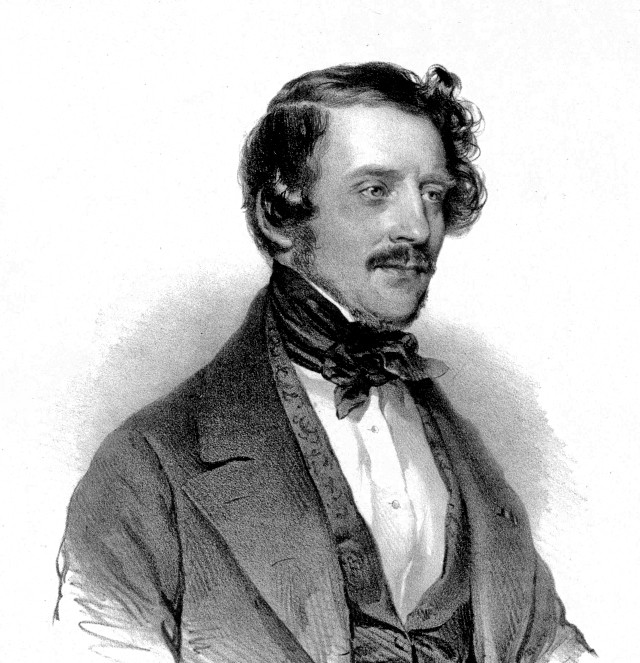
Those who are already familiar with the Spiritist Doctrine codified by Allan Kardec will not be surprised if someone asserts that Spirits, upon returning to Earth in new bodies, once they have reached a certain degree of evolution, bring with them tasks to fulfil in the moral, religious, literary, artistic, and scientific fields. Gaetano Donizetti, for example, chose the mission of spreading music—but a music capable of moving and sensitising people, mastering not only their intellect but, above all, their emotions. Today, it is known that music, as medical science has already observed, often performs therapeutic functions. It also effectively influences increases in workplace productivity. Donizetti, therefore, brought “sonic medication” to the communities that needed it—a meditation that continues to be enjoyed and profitably applied to this day. When he reached the age at which he could decide on his career, he was advised to choose between Law, in accordance with his father’s wishes; Architecture, owing to his extraordinary talent for drawing; or Music, to which he felt drawn by an inner voice—the voice of his spiritual Guide, the voice of destiny, as one of his biographers expressed it.
Despite his great admiration for Vitruvius’ science, and even though his parents wished him to pursue a career in law, destiny—still so little understood in our days—prevailed, and Gaetano Donizetti established himself in the world as a musical composer. By the age of seventeen, he was already composing symphonies, string quartets, cantatas, and sacred music, with the ease that had always characterised his talent. After returning to his hometown following several years of study abroad, Donizetti was met with his parents’ insistence that he abandon theatrical music in order to devote himself to teaching, which promised greater income. His family was poor, and naturally, as a teacher he would find it easier to earn money to support himself and contribute to household expenses. Donizetti, however, was a vibrant soul who could not, under any circumstances, be bound to the role of instructor. His imagination and intellect soared far above the ordinary. To avoid being forced into a teaching career, he enlisted as a soldier, as the leisure afforded by military life would allow him more freedom to devote himself to his beloved passion.
It is said, with a certain degree of truth, that God writes straight with crooked lines. In Donizetti’s case, precisely that happened. In his leisure hours—which were many—he composed Enrico, Conte di Borgogna, his first opera, and then Il Falegname di Livonia. Thanks to the success of Il Falegname di Livonia, he was fortunate enough to encounter people of great influence who secured his release from military service, and with their support, he immediately embarked upon an intense musical career. His capacity for improvisation was astonishing: he never planned what he was going to write; he simply sat down and surrendered himself entirely to the inspiring muse. His work was almost mechanical; like an exceptional mediumistic instrument, he reproduced, together with his musical knowledge, the gentle and wonderful orchestrations whose magnificent sonorities he felt intensely within himself.
Undoubtedly, many spiritual authors contributed to the music he presented mediumistically. Consequently, the genres of his compositions were varied: the Septuor and the tomb scene in Lucia di Lammermoor, the fourth act of La Favorita, are pages of intense, throbbing emotion that bring tears to the listener’s eyes. The scores of Don Pasquale and L’Elisir d’Amore, by contrast, fill us with open, communicative joy. Donizetti, therefore, was not a composer who followed a particular school. His “school,” if it can be called that, was one of pure and simple inspiration. Under these conditions, he was capable of producing works that are magnificent exemplars of vigour and indisputable beauty, such as Elisabeth de Kenilworth, Esula di Roma, Linda di Chamounix, Lucrezia Borgia, and others that lacked intrinsic value when, forced by circumstances, he composed without any higher inspiration. A music critic asserted that, after Rossini, Donizetti was the most celebrated composer worldwide and the one who best comforted Europe musically, lifting it from the painful silence into which the great Rossini had plunged it from 1829, following the premiere of his brilliant opera Guillaume Tell.
 English (UK)
  Español
  Deutsch
  Português do Brasil
  Français
  Русский
  Türkçe
  Italiano