Suicide: useless to end suffering, it makes it endure
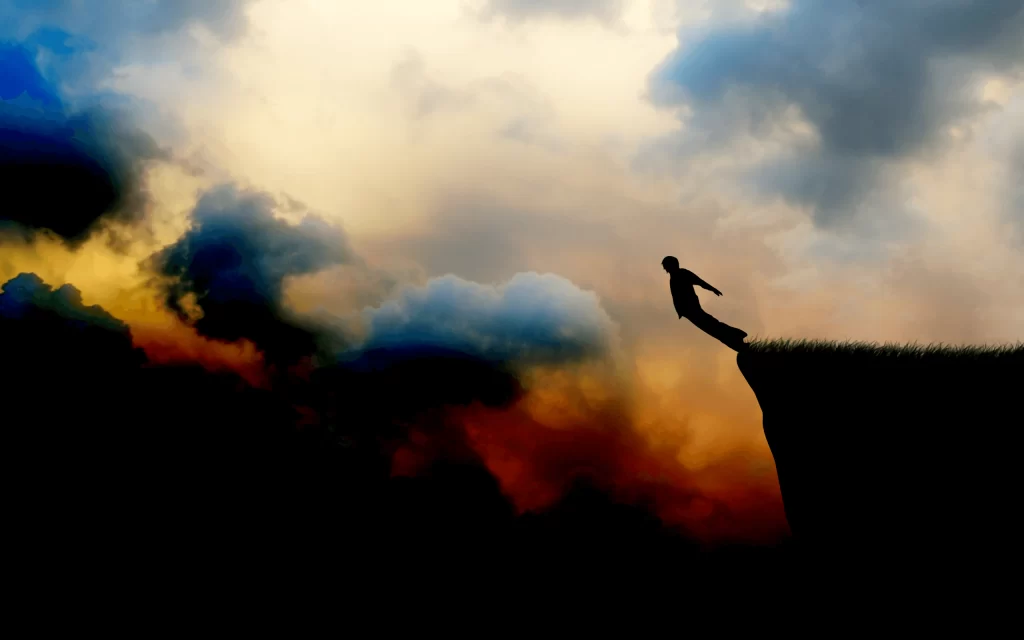
Camilo awoke in what he called the Valle Siniestro some time after his disembodiment. The ear - in which he had fired the bullet that took his existence - was still bleeding incessantly. In his mind, still confused, he registered what he saw around him: other spirits screaming, moaning, cursing. In general, suffering. From time to time, a group of executioners would pass by, inflicting punishment on those they considered guilty. Their idea of justice was still far removed from the divine, and was sewn together with the threads of the desire for vengeance. However, the infinite mercy of the Creator was also present. A caravan of do-gooders constantly came to the Valley. It brought spirits ready to receive help to a hospital of balance and charity. Among those who remained, some begged for help, while others misperceived the passing of the caravan of good.
This is what Ivonne A. Pereira describes in the book Memoirs of a Suicide, after being guided through her experience by Camilo himself in a mediumistic way. In the outer darkness there was ‘weeping and gnashing of teeth’, the book recalls, quoting the biblical passage. This image alone should be enough to dissuade those who think about suicide from actually committing it. Life does not end after the death of the physical body. If the suicidal person's intention is to end his suffering, because of unbearable pain he feels in body or soul, his goal will not be realised. Contrary to what materialists believe, the pain will continue in the spiritual world, aggravated by the dire consequences of the desperate act. Suicide, therefore, is not only useless in ending suffering, but makes it last longer.
The Spirits' Book explains to us, in the answers to questions 946 and 948, that the tribulations of life are trials or expiations, that is, difficulties which help us to learn moral lessons, or to make amends for faults we have committed in past lives. To escape from them by suicide does not erase our faults. It only causes us to relive the old pains, plus the new pains generated by the new mistake. Places like the one related by Camilo are not the only ones where suicidal spirits arrive, and they can also stay close to the physical world. In the book Heaven and Hell, there are different examples of suicidal experiences shortly after their disincarnation. There are those who remain attached to the body, and therefore feel suffocated by the coffin and experience the pain of worms eating away at matter. There are also those who feel pains and sensations of intense heat and cold, even though they are already disembodied. Others replay in their mind the moment of suicide, like the one who feels himself falling into the void over and over again. Spirits who were looking for a reunion with a loved one in the spirit world experience just the opposite effect: they cannot find him or her. Finally, there are those who hear mockery and laughter, which intensify their moral suffering.
After a suicide, the affliction of the perispirit is strongly manifested. With the wounds marked on the spiritual body, the being cannot get away from his or her pains and repeats them, albeit mentally. In the case of suicides, there is an aggravating factor: as they have not completed their reincarnation period on Earth, the bond between the spirit and the body persists. ‘The consequences (...) are the prolongation of the disturbance and then the illusion that for a more or less prolonged period of time induces the spirit to believe that it is still part of the living. The affinity that persists between the spirit and the body produces, in some suicides, a sort of repercussion of the state of the body on the spirit‘, explains Allan Kardec in his commentary to question 957 of The Spirits’ Book. To this pain is added the regret of having done something useless, since suicide solved nothing.
When suicidal spirits succeed in leaving those early stages of suffering in spirituality, they still have a long road ahead of them to recover. Each process, of course, is individual. ‘The penalties are always in proportion to one's awareness of the faults committed,‘ explains The Spirits’ Book in the answer to question 952A. The consequences, therefore, are diverse and depend on the circumstances. The atonement of the suicide can take place either in the spirit world or in a new existence, adds the answer to question 957. In Memoirs of a Suicide, a companion of Camillus is allowed to visit his family in the material world, although he had been strongly advised against it by friendly spirits. Arriving on the globe, he found that his son was in detention and his wife was prostituting his youngest daughter. The other daughter was suffering at the hands of an alcoholic husband. His suicide had impacted not only his individuality, but his entire family immensely. The moral pain she felt at the time was perverse. She decided, then, to reincarnate to recover her perispirit from the mistakes she had made. He would go through an ordeal similar to that of the previous life, hoping this time not to fail. Another of his fellow suicides felt daily tormented by his faults. Even though he was in a hospital in the spirit world, he could not stop repeating his mistakes in his mind. Therefore, he chose to reincarnate and enjoy the oblivion of the past. In the new body, however, he would not have the hands that had harmed him in the past.
After the suicidal spirit understands his situation of non-compliance with the Divine Law, and commits himself to repairing his mistakes, the moral pains are the ones that affect him the most. Camilo, for example, revisited his past through spiritual equipment, guided by a teacher. The memories made him relive his past as a persecutor of the Holy Office, responsible for torturing and condemning to death those who did not profess the Catholic faith. He even inflicted unspeakable pain on one of them, driven solely by personal hatred. Recognising himself no longer as a victim, but as the architect of his own misfortune helped him to reflect and to seek his own transformation through service for the good and, later on, through a new reincarnation.
The consequences of suicide are not a punishment inflicted on us by others. They are part of divine mercy, because they allow us to understand our mistakes, to learn from them, to overcome them and to transform ourselves morally. The only possible way to make amends is to go through the consequences with resignation. But we are not alone in this work: friendly spirits, incarnated and disincarnated, surround us with their love and inspire us to the path of good. Let us listen to them, let us ask for help, let us accept the kind hands they extend to us. In so doing, we avoid pernicious influences and bad decisions which do nothing to shorten suffering, but only increase it.
Text: written by: Fernanda Barbosa, for Spiritist Opinion.
 English (UK)
 Español
 Deutsch
 Português do Brasil
 Français
 Русский
 Türkçe
 Italiano