Antônio Gonçalves da Silva
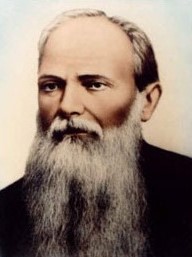
Antônio Gonçalves da Silva was born on 19 March 1839 in Portugal, in the parish of Águas Santas, today part of the municipality of Maia. The son of humble peasants and with only primary schooling, he came to Brazil at the age of 11, arriving in Guanabara on 3 January 1850. For three years he worked in commerce in the Court. From there he moved to the city of Campinas, in São Paulo, where he remained for some time until he moved permanently to the capital.
At that time, the capital had less than 30.000 inhabitants and, during his first years here, Batuíra worked as a distributor of the newspaper "Correio Paulistano", since at that time there were no newsstands and delivery was made in the afternoon, from house to house, only to subscribers. Diligent, honest and docile in spirit, Batuíra made friends and admirers everywhere as a paperboy. It seems that it was at this time that he learned the art of typography, most probably in the workshops of the "Correio Paulistano".
Very active and running from one place to another, he was nicknamed «the batuíra», the name given by the people to a very light and fast-flying bird that frequented the ponds formed by the overflow of the Tamanduateí River, where the D. Pedro II Park is located today. The young man's name was Antonio Gonçalves da Silva, but from then on he adopted the nickname BATUÍRA. Soon after, with the savings he had gathered and, of course, with the help of friends, he set up a small theatre in the back room of a tavern on Rua Cruz Preta.
Many aficionados made their debut in that modest theatre, including Batuíra. Persevering in his determination, he then dedicated himself to the manufacture of cigars. Thus, with hard work and economy, Batuíra increased his modest finances, which allowed him to marry Miss Brandina Maria de Jesus, with whom he had a son, Joaquim Gonçalves Batuíra, who died as an adult and married. Bold like the great entrepreneurs, he invested his money in the purchase of undervalued areas, starting to build small houses to rent, thus becoming a wealthy landowner, whose wealth was the fruit of many years of hard and honest work, combined with unwavering perseverance.
When everything seemed to be going well, the only son of his second wife, Mrs. Maria das Dores Coutinho e Silva, died almost suddenly. He was a twelve-year-old boy for whom the couple felt great devotion and affection. This blow deeply wounded that home, which could only find consolation in the comforting Doctrine of the Spirits. So great was the peace that Spiritism instilled in them that Batuíra immediately set to work, fervently desiring that other companions in their earthly labours should know this blessed source of hope, and that within this short, stoutly built body, a heart of gold should expand their noble sentiments of love for their fellow-men.
In 1889, Batuíra became the exclusive agent of the magazine "Reformador" in the city of São Paulo, a position he held until 1899 or 1900. On April 6, 1890, he re-established the Spiritist Group Truth and Light, a spiritism establishment that had been ‘inactive’ for a long time. He then acquired a small printing press for the dissemination and propagation of Spiritism, publishing the fortnightly "Verdade e Luz" (Truth and Light), which reached 15,000 copies in 1897, a considerable number for the time. Batuíra was also a healing medium. He performed hundreds of physical and spiritual healings through the administration of effluvium or the application of "magnetic passes". For this reason, the people who benefited from Batuíra came to call him the "Doctor of the Poor", a cognomen that also haloed the name of Adolfo Bezerra de Menezes.
Batuíra's charitable work was not limited to these manifestations of Christian charity. He went much further. He created Spiritist Groups and Centres in São Paulo, Minas Gerais and Rio de Janeiro, which he encouraged and assisted; he held conferences on various doctrinal subjects in innumerable cities of several states, where he also visited and cured suffering brothers and sisters; he distributed free pamphlets and leaflets of propaganda of Spiritism, which he himself printed, and distributed thousands of books all over the countryside. Batuíra, together with other illustrious confreres, created in São Paulo, on May 24, 1908, the «Unión Espírita del Estado de São Paulo» (Spiritist Union of the State of São Paulo), which would federate all the centres and groups existing in the State.
This was the brave worker of the Third Revelation, the tireless fighter who never allowed himself to be overwhelmed by the hardships of the journey, and who was undeniably one of the greatest propagandists of Spiritism in Brazil. Carrying many responsibilities on his shoulders, he did not feel, so attached to the fulfilment of his duties, that his vital forces were quickly exhausted. A sudden illness assailed his body and, outwitting all medical resources, in a few days forced him to cross the frontiers of the beyond. On Friday, 22 January 1909, at about one o'clock in the morning, Antônio Gonçalves da Silva, Batuíra, died.
 English (UK)
  Español
  Deutsch
  Português do Brasil
  Français
  Русский
  Türkçe
  Italiano