William Thomas Stead
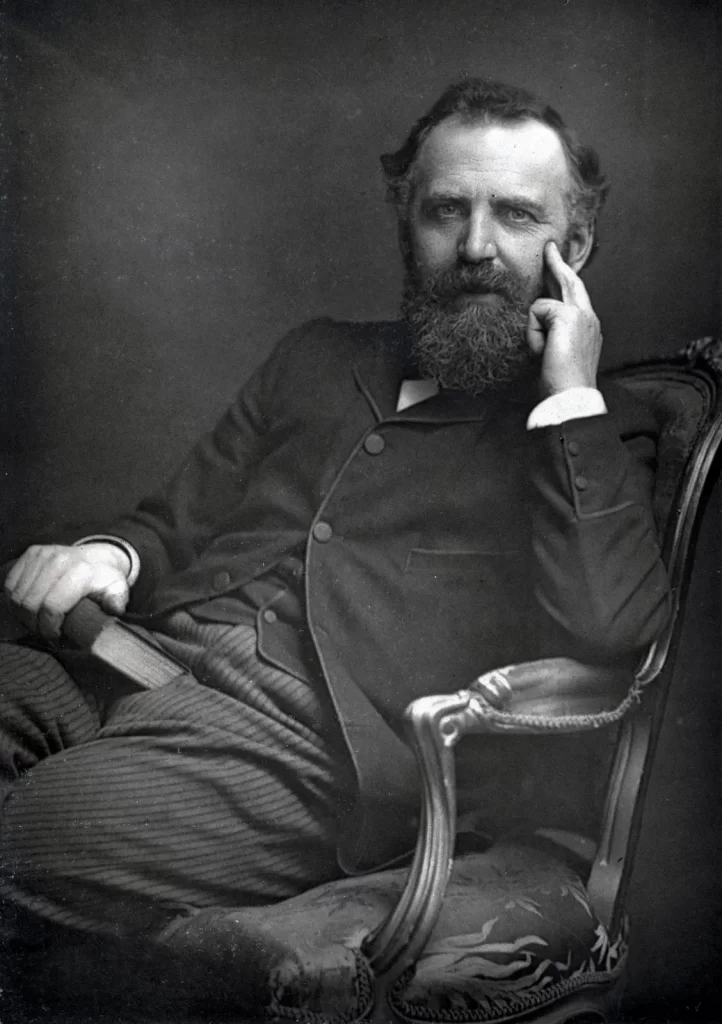
Born in Embleton, Nothumberland, England, on 5 July 1849, and tragically disincarnated in the Titanic disaster of the night of 14-15 April 1912.
In the early 1910s, no reports were made on major events. A notable journalist, William Thomas Stead, had the happy idea of starting this kind of advertising, which achieved great success in England.
On the occasion of the launch of the Titanic, the world’s largest ship, reputed to be unsinkable, such innovations introduced in it and the construction system, this famous press man was invited to do the report of his maiden voyage, Giving press coverage to everything that happened on board.
It happened, however, that the ship crashed into a huge iceberg and in a rescue attempt ordered by the commander, an enormous crack opened in its hull, causing its shipwreck on the night of 14 to 15 April 1912.
Among the 1503 victims was William Thomas Stead. The unfortunate event filled the world with consternation and Spiritism was deprived of the valuable contest of a prominent press man, man who was actively engaged in spreading the great truths he had found in his research work in the field of mediumistic phenomenology.
William Thomas Stead, a noted English journalist, writer and publicist, devoted himself at a very young age to this career.
In 1871, he directed the Norhern Echo of the city of Darlington and, in 1883-1889, he directed the Pall Mall Gazette.
In 1890, he founded the Review of Rewies and in 1893 and 1894 launched numerous journals of the same kind in the United States and Australia.
From 1893 to 1897 he directed the spiritualist organ Borderland.
In 1898, he began a visit to Russia, where he was received by the Tsar, starting the intense struggle for world pacifism, an ideal that he came to defend with all enthusiasm, through the written and spoken word.
During the Peace Conference in The Hague in 1899, Stead had the opportunity to visit that city and soon after began his campaigns against the South African war in England, and as a result he has been enmity-stricken.
He worked hard and valiantly to establish a treaty between Germany and England, advocating the holding of a second peace conference, later held in The Hague, Netherlands, where, as a correspondent, He published the Peace Conference Courier.
It was remarkable how easily he wrote his articles, which invariably carried a sensationalist character.
In his books one can see the vivacity and commitment with which he dealt with the subjects he wished to address: The truth about Russia (1888), If Christ Came to Chicago (1893), The War of Labor in America (1894), The Invisible World of Satan (1897), The United States of Europe (1899), Studies on Ms. Booth (1900), The Americanization of the World (1902).
The king of journalists and, more than that - the emperor, was the laudatory title he received in Paris in January 1907, four months before the famous Hague Conference.
When he was at the peak of his career as a writer and journalist, some years before his disincarnation, he left England and the scientific world full of admiration with his confession that he was fully convinced of the existence of the spirit world, because he received, through his own mediumship, a series of Spiritist communications attributed to the Spirit Julia, which were later published in a book that achieved great success, called Letters of Julia.
He said: Julia’s letters were received by myself. Alone, sitting and with a quiet mood, I consciously placed my right hand, on which I had a pen, at Julia’s disposal and watched with keen interest everything she wrote. I can admit, as my detractors claim, that Julia’s letters were written simply by my subconscious self, that would not diminish in any way the truth, nor would it diminish the strength of this eloquent and moving proof in favor of the higher life. How I wish my conscious self could write so well!
In 1895, answering a question from the New York Morning Advertiser asking why he believed in immortality, he replied: Only the Eternal can affirm or deny immortality. If I understand you well, it is not the immortality of the soul but the persistence of the individual entity, after the dissolution of the body, by means of which that entity manifested itself during its earthly life. There is a much simpler question, which I can answer without hesitation and without fear. It would not be true if I said that I believe in the persistence of the individual after death, for having observed the phenomena called spiritists. Long before I accepted that fact. Then I put my belief to the test of an experimental demonstration. And if you ever said: I believe, today I say, I know. Is there no big difference?
William Thomas Stead was a great friend of the great Ruy Barbosa.
It is said that on the night of the Titanic’s shipwreck, the family of this great Brazilian politician, gathered in a mediumistic experiment session, in Poços de Caldas, received the information that the famous journalist had disincarnated, news that Ruy received with surprise and quite naturally, when one of his family members communicated it to him.
The old politician recognized in the message, surprisingly, the style of Stead.
 English (UK)
  Español
  Deutsch
  Português do Brasil
  Français
  Русский
  Türkçe
  Italiano