Fernando Miramez de Olivídeo
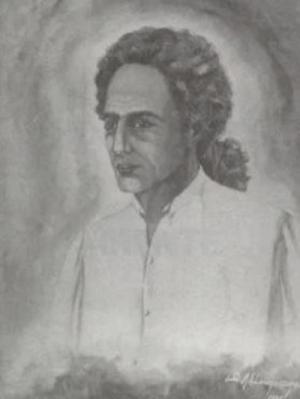
Miramez was the son of a noble couple who lived in northern Spain. His mother was French and his father Portuguese. Intelligent and studious, from an early age he was interested in the discovery of the Americas, where, on several occasions, he saw himself disembarking in ports he considered blessed. Miramez was close to Philip IV, King of Spain, who knew his principles of integrity and high morals. However, for the king, Fernando had shortcomings that he wanted to correct: he was averse to war, repudiated violence and supported the rights of peoples and, above all, of individuals. That is why he appointed him, with the powers of head of state, as ‘the ears of the king and the mouth of Spain’ in the Lands of Santa Cruz, in order to closely monitor Portugal's colonialist action in America. The very night the king made the invitation, Miramez felt that something he had long cherished in his soul was beginning to come true. In a peaceful dream, he was taken on an astral journey to the lands where he would soon disembark. The next day he woke up humming, enveloped in a strange joy, the kind that usually accompanies all those who think, live and act for the good of humanity.
Thus, one day in 1649, when Innocent X reigned in Rome, the envoy of the King of Spain landed secretly on the coast of Brazil as a tourist. Friendly and sociable, he was fluent in many languages and, already on the boat that was taking him to the beach, he interacted with the slave rowers. A remarkable event upon his arrival was that several indigenous people on the beach approached him as if to welcome him, while the tribe's witch doctor pointed to his right and exclaimed, ‘Babagi! Babagi!’ In indigenous tradition, Babagi was the deity responsible for healing through the shamans of each tribe. He was, in fact, a spiritual entity who accompanied Miramez. He soon found himself surrounded by his new friends, who saw in him the possibility of alleviating the suffering and persecution they endured under the rule of foreign invaders. In a short time, Fernando had already assimilated the various indigenous and African dialects, moving with ease among the humble.
One night, while gazing at the stars, he was overcome by a strong memory of his distant homeland, where he possessed countless valuable assets, including properties and lands. As he pondered whether to return to Spain, he heard a soft voice, as if born within his conscience, recommending that he do what the rich young man mentioned in the Gospel refused to do when Jesus advised him to dispose of his possessions before following him (Matthew, XIX: 16-24; Luke XVII: 18-25; Mark X: 25): ‘Go, sell all your possessions, distribute them among the poor, and you will have treasure in heaven; then come and follow me.’ Surprised, he felt that he knew that voice, but where from? It seemed to him that he had heard it before, but when? He felt lost in the ocean of centuries.
However, the voice was heard again. ‘Fernando, you can sell all your possessions in Spain and distribute the money among the needy in your homeland! Those here, who need to go through renewal processes, need your mental wealth more, the result of your hard-working hands, the treasure stored in your heart and your comforting presence.’ Miramez then sent a power of attorney to his trusted friends, authorising them to dispose of his assets and distribute the proceeds among the needy and suffering in the Iberian Peninsula, allowing him to live with a clear conscience and carry out important mediation work. Some Indians and blacks did not get along, harassing each other. Working hard to bring the two races closer together and promote coexistence, his efforts soon bore fruit: Indians and blacks began to celebrate their traditions together, united by the bonds of idealism, friendship and suffering. Miramez then began to frequent the group of European catechists, as he found there a fertile ground for the practice of his ideals. As a result of his work and joint efforts, the law protecting indigenous peoples was enacted in 1680.
His death took place in an atmosphere of great serenity. The blacks and the catechised indigenous people formed a long line to kiss the hands that had helped them so much. While he was still lucid, Miramez blessed them one by one. In his final moments, Fernando Miramez de Olivídeo sensed the presence of his loving mother, as well as a sublime entity that he preferred not to identify, considering that he did not deserve such an honour. With tears in his eyes, Miramez detached himself from his physical body and, once outside it, wept with happiness and gratitude for having entered Brazil through the doors of love and charity, which were opened to him by Jesus.
 English (UK)
  Español
  Deutsch
  Português do Brasil
  Français
  Русский
  Türkçe
  Italiano