Clélia Soares da Rocha
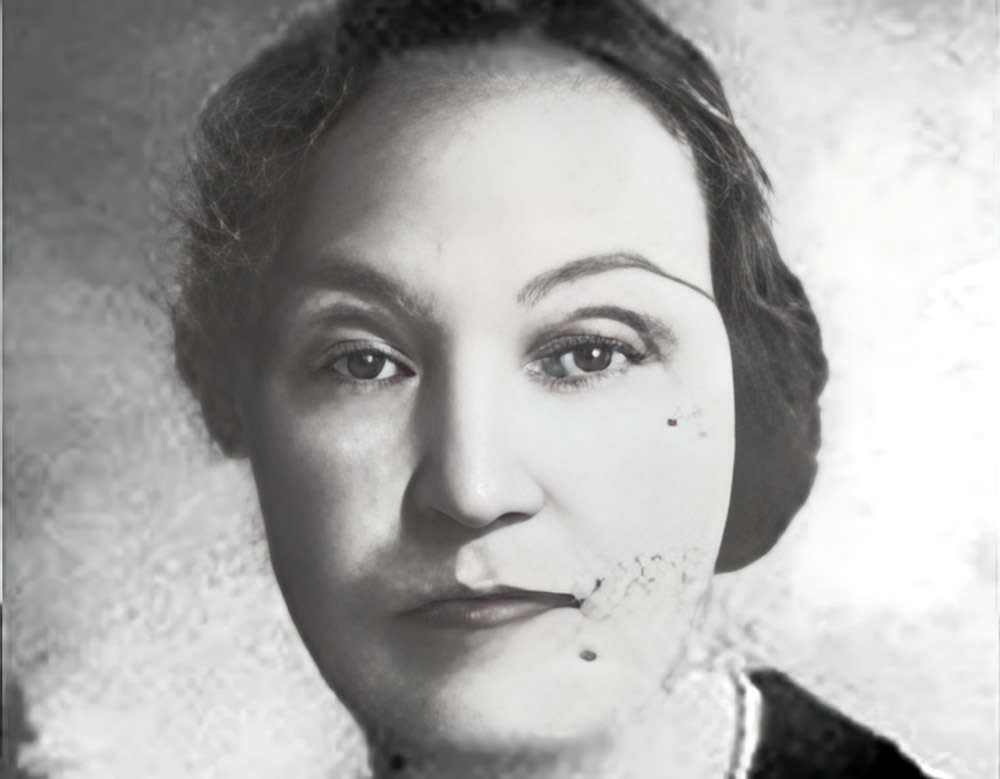
Clélia Soares da Rocha was born in the city of Barra Mansa, State of Rio de Janeiro, on 18 October 1886 and passed away at the age of 50 on 16 February 1936. She was educated as a boarder at Colégio Bom Conselho, in the city of Taubaté, completing her education in the city of Piracicaba, where she received her primary school teaching diploma. She taught for several years at Colégio das Freiras, in the city of São Carlos. Coming from a traditionally Catholic family, Clélia Rocha soon showed repugnance for the dogmas of her parents' religion, which happened early in her childhood, resulting in serious punishments at the boarding school, where she came to be considered a rebellious child.
While still a student in Piracicaba, she met a young doctor, whom she agreed to marry. However, the young man died suddenly, shattering all her dreams as a young woman. She never thought about marriage again, dedicating her entire life to teaching and caring for orphaned and disadvantaged children. One day, she decided to open a school in the city of Dourados to teach adults who were unable to attend classes during the day. She ran it for some time and provided free teaching materials to all those who could not afford them.
At that time, the great missionary Anália Franco visited the city and, seeing the unspeakable sacrifice that the young teacher was making, invited her to join her team, offering to help her in any way she could. From that time on, they became great friends and mutual collaborators. They founded a daycare centre for poor mothers in the neighbourhood and a shelter for orphans. Anália Franco had complete confidence in Clélia Rocha's work. In one of her letters, she even stated: ‘You are the director who has best assimilated our ideals and has achieved so much. If all the other co-workers did as you do, we would accomplish a great deal.’
At the end of 1918, Anália Franco founded a nursing home in the city of Uberaba, in Minas Gerais, and invited Clélia Rocha to be its director. Shortly thereafter, on 13 January 1919, Anália passed away in São Paulo, unable to complete her work. Clélia, faithful to her memory and respecting her last wishes, decided to move to Uberaba with all her pupils, later founding a school in that city with 18 boarders to accommodate her 72 boarding students. In view of her charitable work, she repeatedly applied for municipal, state and federal subsidies, but her petitions never received any response because, as a Spiritist, she was intensely persecuted by local priests. Like Anália Franco, she organised a Literary, Artistic and Musical Ensemble with her own pupils and toured the cities of the interior of the states of São Paulo and Minas Gerais, obtaining the means to maintain her establishment, with some success. Faithful to the memory of Anália Franco, she did everything to ensure that the ideals she espoused were maintained in their entirety, always conducting herself with a true spirit of self-denial and sacrifice, always attesting to her spiritual greatness.
She founded the Liga Feminina Operárias do Bem (Women Workers' League of Good) with her pupils over the age of 16, with the aim of forming new teams of cooperators who could later continue her great charitable work. In 1924, she moved to the city of São Manoel, in the state of São Paulo, where she met Amando Simões, a wealthy farmer in the region with a well-educated mind and a generous heart who, knowing her great difficulties and stoic courage, decided to help her by donating a building and part of his land so that Clélia could set up her educational establishment there. Thanks to the prestige of this selfless confrere, she soon had the support of part of the population and the sympathy of the City Council, thus enabling her to expand her charitable work. She welcomed dozens of orphaned children into the ‘Lar de Anália Franco’ and held numerous weddings for her former students there, entrusting them with the task of becoming housewives, reintegrated into society, to serve as wives and mothers.
In 1930, at Christmas time, she founded the ‘Creche Berço de Ouro’ (Golden Cradle Nursery), intended to take in small children, maintaining it with all the love in her soul. She was a fervent Spiritist and was very interested in doctrinal matters. Anália was a writer, journalist, poet, playwright, musician and language teacher. She wrote several plays for the theatre; her dramas, comedies and surveys were staged with great success by the Theatre Group. She also presented many poems and musical compositions. An accomplished teacher of manual arts, she taught classes in artificial flowers, painting, embroidery, culinary arts, and music, preparing her adopted daughters to become talented housewives of the future.
In private, she was called ‘Mother Lili’ by all her adopted daughters. She gave her own name to many of them when they were abandoned at the ‘Creche Berço de Ouro’ (Golden Cradle Nursery) and their relatives did not show up. Having to regularise their civil records, she never hesitated to register them under her own name. She founded the literary journal ‘Lírio Branco’ and ‘Mensageiro do Órfão’ (now ‘Mensageiro do Lar’), a publication promoting Spiritism, which continues to be edited in the printing workshops of Lar Anália Franco, in the city of S. Manoel. Clélia Rocha was, therefore, a missionary in the true sense of the word, belonging to the group of valiant Spiritist women of the same calibre as Anália Franco, Olímpia Belém, Aura Celeste, Eurídice Panar, Abigair Lima and so many others.
 English (UK)
  Español
  Deutsch
  Português do Brasil
  Français
  Русский
  Türkçe
  Italiano