The brain and the mind
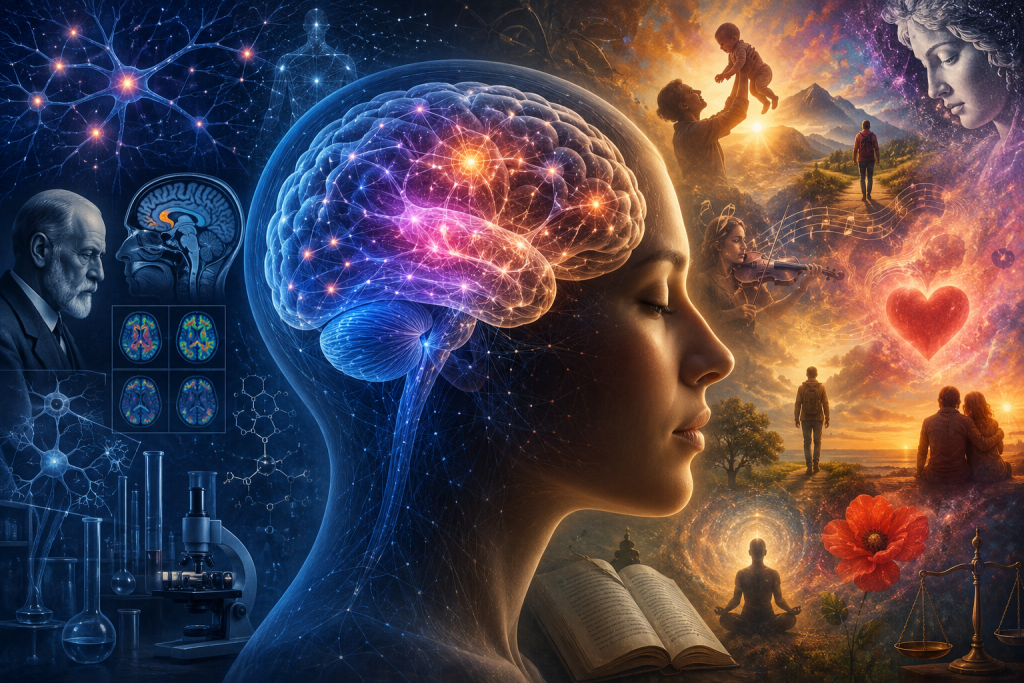
The final decade of the twentieth century was referred to by neuroscientists as “the decade of the brain”. Professionals dedicated to the study of neuroscience came together with a common objective: to gain a better understanding of how our brain functions. As a consequence of this work, debates surrounding our consciousness or mind resurfaced. From the 1990s onwards, we witnessed a large number of neurological and cognitive experiments, accompanied by magnificent images of the brain in operation, obtained through functional magnetic resonance imaging and positron emission tomography (PET), which culminated in a revival, albeit an involuntary one, of materialist ideas about the mind.
Until the beginning of the eighteenth century, the mind was naturally identified with the human soul, and the brain was regarded as the vehicle through which it manifested itself. Supported by the new discoveries of the basic sciences, distinguished medical practitioners in the nineteenth century began to devote themselves more deeply to the study of the brain and the diseases that affect it. Great neurologists of history then emerged, including Parkinson, Charcot, Broca, Huntington, Sherrington and Freud, among others.
In 1884, William James and, in 1885, Carl Lange independently proposed a theory linking physiological events with mental states. According to this theory, known as the James–Lange theory, consciousness was an effect of physiological responses (“we are afraid because we run; we do not run because we are afraid”). In 1960, Stanley Schachter expanded this theory by proposing that the cerebral cortex constructs consciousness from information received from the periphery of the body and, at the end of the twentieth century, António Damásio, with his somatic marker theory, established that consciousness is essentially a story that the brain invents to explain bodily reactions.
On the other hand, Sherrington (1906), Cannon (1927) and Bard (1928) opposed the James–Lange theory and proposed a theory according to which consciousness arose simultaneously with behaviour. Later, Papez (1937), Lindsley (1951) and MacLean (1952) added certain elements to the Cannon–Bard theory, without, however, altering its essence. It was not until 1993 that the final book by Sir John Eccles, winner of the 1963 Nobel Prize in Medicine, was published, “with the aim of refuting and denying materialism in order to reaffirm the supremacy of the spiritual being over the brain”.
It is undeniable that a better understanding of the cellular and biochemical structure of the brain contributes to a better understanding of how neurological diseases develop (the technical term that describes this knowledge is pathophysiology). Moreover, this knowledge makes it possible to develop new treatments for such diseases. However, attempting to reduce the mind to a mere effect of brain activity creates problems far greater than one might imagine. Why?
Because our brains are, essentially, static in their structure and function. Their cellular composition is uniform, consisting of neurons (or nerve fibres) and other cells called glial cells, organised in anatomical arrangements that are stable and well understood today. From a biochemical perspective, neurotransmitters, the substances responsible for transmitting nerve impulses, are always the same molecules: dopamine and serotonin, which have an excitatory action, and GABA and acetylcholine, which have an inhibitory action. Similarly, a neural pathway, such as that involved in vision, is static in its structure and function. The transduction of the visual stimulus into a nerve impulse and its transmission along the optic nerve to the visual area of the occipital cortex are clearly defined and established, both anatomically and biochemically.
However, the symbolic interpretation of what is seen is individual and unique to each person. Thus, for one person, the colour red may symbolise blood and suffering, evoking unpleasant memories and physical reactions of distress. For another person, the same colour red may symbolise love and comfort, awakening pleasant memories which, in turn, will trigger a state of well-being. How, then, can we justify the fact that a physical structure organised in a static manner and with a well-defined physiology can produce such a wide range of effects, as different from one another as the personalities of individuals themselves? What is most curious about this attempt to “objectify” the mind is that dictionaries themselves define it as “an organised system of the human being relating to the totality of their cognitive processes and psychological activities; the incorporeal, intelligent or sensitive part of the human being; spirit, thought”.
This attempt to materialise the mind becomes even more anachronistic when we recall the etymological meaning of the words mind and psyche. Mind derives from the Latin mens, mentis, meaning “intellectual faculty”, “intelligence”, “spirit” or “soul”; while psyche derives from the Greek psyché, with the same meanings. If a simple visual stimulus can generate such divergent responses, what are we to make of much more complex mental processes, such as those activated when we enjoy good music, play with a child, or feel nostalgic for a loved one who is far away from us?
Allan Kardec wrote in The Spirits’ Book (p. 176): “If faculties had their origin in the organs, man would be a machine, without free will and without responsibility for his actions. We would have to admit that the greatest geniuses, scholars, poets and artists are geniuses only because chance gave them special organs. It would therefore follow that, without those organs, they would not be geniuses, and that the least intelligent of men could have been a Newton, a Virgil or a Raphael if he had been endowed with certain organs.” In the answer to question 370 of the same book, we are informed that “it is not the organs that give rise to faculties, but the faculties that stimulate the development of the organs”. In other words, it was not the cars that made Michael Schumacher a champion; it was the driver who, thanks to his skill, made the cars cross the finishing line first.
Spiritism, according to the definition given by its own codifier, is a science, that is, a “systematised body of knowledge which, acquired through the observation, identification, investigation and explanation of certain categories of phenomena and facts, is formulated methodically and rationally”; therefore, it has the authority to pronounce upon matters that concern it: the soul, the Spirit, the mind or the psyche. The so-called positive sciences have difficulty accepting the knowledge that gives the Spiritist Doctrine the character of a science; however, by failing to do so, they lose the right to question it. Acting out of prejudice arising from preconceived systems, they classify as mystification, superstition or even charlatanism that which they neither know nor understand, thereby showing complete disregard for the philosophical and religious aspects that are characteristic of it. For this reason, Allan Kardec stated in The Spirits’ Book (p. 32): “Science, properly speaking, as Science, is incompetent to pronounce upon the question of Spiritism…” Science, divorced from religion (from the Latin religio/onis, meaning any affiliation with a specific system of thought or belief that entails a philosophical, ethical, metaphysical, etc. position; a scrupulous conscience), is like a lorry descending a slope without brakes: it is out of control. Religion, in turn, without science, becomes lost in the labyrinths of religious fanaticism.
For us, Spiritists, there is an obligation to study science; however, it is essential to preserve the essence of the Spiritist Doctrine so as not to make the mistake of materialising the Spirit. Rather, we must concentrate our efforts on the intention of spiritualising science.
David V. Monducci
 English (UK)
 Español
 Deutsch
 Português do Brasil
 Français
 Русский
 Türkçe
 Italiano