Heinrich Heine
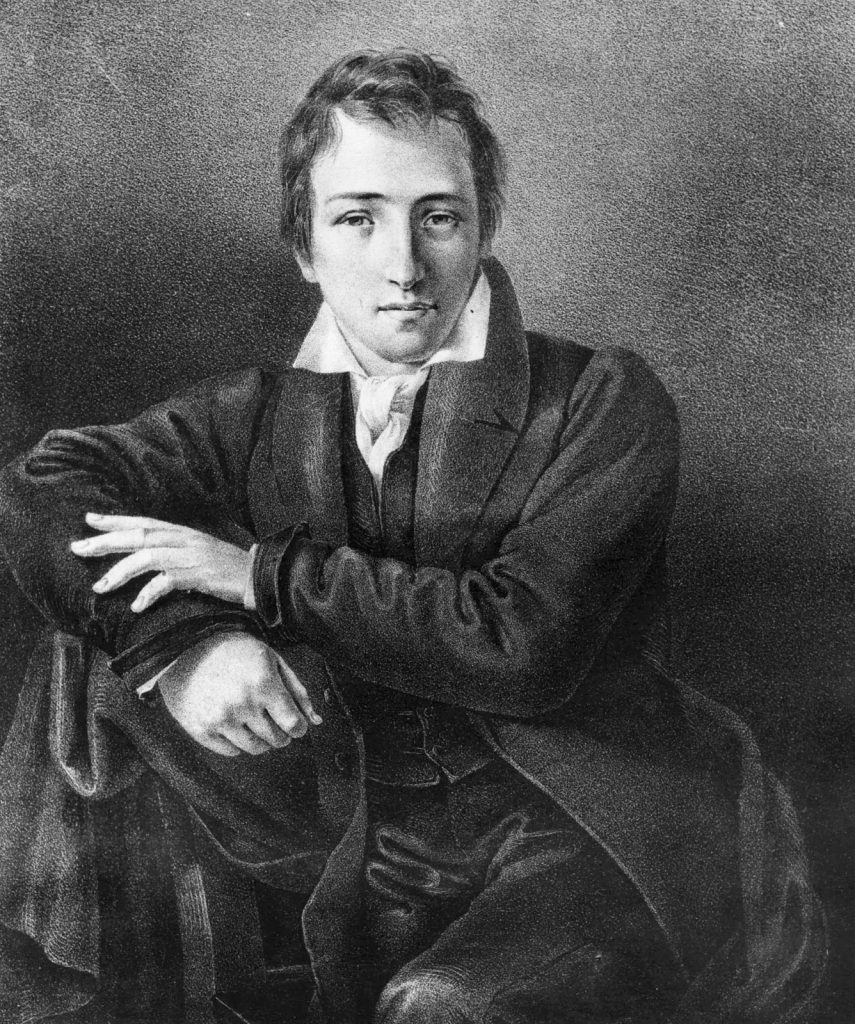
Heinrich Heine signed the message included in The Gospel according to Spiritism, in point 3 of chapter XX, entitled The last shall be first.
He was born in Düsseldorf on 13 December 1797 into a Jewish family. His destiny was commerce, so he was sent by his father to a banker uncle in Hamburg. It soon became clear that he had no business skills, and his uncle sent him to Bonn to study law. But young Harry, as he was then called, became interested in literary matters and followed courses in literature.
Berlin was his most favourable environment, allowing him to attend literary salons and follow Hegel's political philosophy. A poet and journalist, he became famous for his poems and travel books. Disgusted by the anti-Semitic climate in the country, he emigrated to Paris in 1831.
There he became a correspondent for the leading German newspapers. He was one of the most restless and controversial journalists of his time. For the Augsburg General Journal, he described French life, his constant subjects being parliament, the press, the artistic world, the theatre and music.
His influence was enormous both inside and outside Germany. In the second half of the 19th century, all German poets seemed to be Heinous.
His poetry is initially melancholic lyricism. His sentimental poems are full of unhappiness and amorous laments. Some of his love poems achieved universal fame and were later set to music by Schubert, Schumann and many other composers.
He wrote poems dedicated to the sea, in free verse. And finally, political poetry, with verses that portrayed situations of the time, such as The Weavers, a poem inspired by the strike of the starving Silesian weavers.
As a prose writer, he is considered one of the most agile in German-language literature of any period. His most ambitious works are The Romantic School and On the History of Religion and Philosophy in Germany. In the latter, Heine seems to have wanted to complete Mme de Stäel's book on Germany by trying to show the French the aesthetic and philosophical thought of his country. It contains the prophecy of a revolutionary awakening of German consciousness and, above all, the poet's belief in the universal importance of Hegel's thought.
He suffered economic hardship, faced political conflicts, and was eventually victimised by illness. He was paralysed and died on 17 February 1856 in Paris.
The message of The Gospel according to Spiritism is dated Paris 1863.
 English (UK)
  Español
  Deutsch
  Português do Brasil
  Français
  Русский
  Türkçe
  Italiano