Frederic Myers
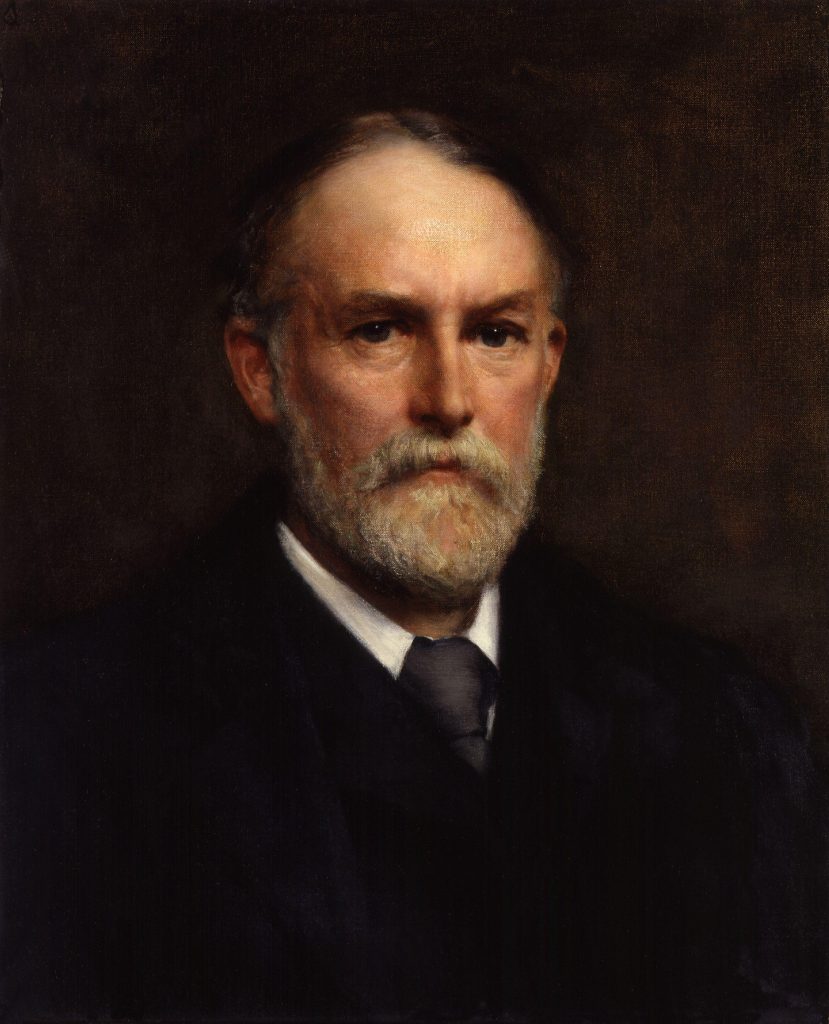
He was born in Keswick (Cumberland), England, on 6 February 1843, and died in Rome, Italy, on 17 January 1901.
Frederic William Henry Myers, better known as Frederic Myers, was an English literary scholar, famous for his remarkable writings and studies on spiritism.
He was educated at Trinity College, Cambridge, and, after achieving a considerable number of successes, was appointed a teacher there and, in 1872, inspector of all the schools in the district. At that time he had already published a poem entitled ‘São Paulo’. In 1870 and 1872 he published two more volumes of poetry. In 1883 he published his ‘Classical and Modern Essays’, a work of considerable literary value.
In 1882, after several essays, studies and discussions, he was first on the list of founders of the ‘London Society for Psychical Research’ and became the society's spokesman, making a valuable contribution to the revision of the masterpiece ‘Ghost of the Living’ (1886), for which he wrote the introduction. He also wrote ‘Science and the Afterlife’.
After his disincarnation, his book ‘Human Personality and its Survival of Bodily Death’ was published, translated into Portuguese under the title "A Personalidade Humana" (The Human Personality), a work which constituted, in fact and in law, a precious contribution to the field of psychical research and which was described by the learned William James as the first attempt to consider the phenomena of hallucination, hypnotism, automatism and split personality as parts of a single whole.
His work "The Human Personality" was dedicated to Henry Sidgwick and Edmond Gurney and is a repository of brilliant teachings. In it, Myers proclaims that ‘as Socrates brought philosophy down from heaven to earth, so it was the medium Emmanuel Swedenborg who raised philosophy from earth to heaven.
The Spiritism owes much to Frederic Myers for the interest he always showed in the investigation of psychic phenomena and for the idealism that guided him, seeking to convince many people through methodical work and the dissemination of spiritist truths, through works that had the merit of sensitising many notoriously influential people, among them ‘Sir’ Arthur Conan Doyle, the brilliant creator of ‘Sherlock Holmes’, who even said in one of his stories that Frederic Myers' work “The Human Personality” was the one that impressed him the most, contributing decisively to his conversion to the Spiritism.
In his work ‘History of the the Spiritism’, Conan Doyle testifies about Myers, saying: ‘The faith which F. W. H. Myers had lost in Christianity was restored by the Spiritism’. In his book ‘The Final Faith’, he says: "I cannot in any profound sense contrast my present belief with Christianity. I regard it rather as a scientific development of the attitude and teaching of Christ".
Consequently, Frederic Myers was one of the most erudite researchers of the last century, and his contribution to the dissemination of spiritism was one of the most appreciated.
 English (UK)
  Español
  Deutsch
  Português do Brasil
  Français
  Русский
  Türkçe
  Italiano