Duty and Freedom
What man, in the hours of silence and recollection, never questioned nature and his own heart, asking them for the secret of things, the reason for life, the reason for the existence of the universe? Where is he who never sought to know his destiny, lift the veil of death, know whether God is a fiction or a reality? It is not human, even if so carefree, that these formidable problems would never have arisen. The difficulty in solving them, the incoherence and multiplicity of the theories that originated, the deplorable consequences that emanate from the vast majority of the developed systems, all this confused set, tiring the human spirit, led him to indifference and skepticism.
Yet man needs to know; he needs the ray that shines, the hope that comforts, the certainty that guides and sustains. And it has also the means of knowing, of seeing the truth, of being freed from darkness and flooded with its beneficial light. For that, he himself must detach himself from preconceived systems, descend, listen to that inner voice that speaks to all of us and that sophisms cannot deceive: the voice of reason, the voice of conscience.
So did I. I reflected for a long time; I pondered the problems of life and death; with perseverance I probed these deep abysses. I addressed to the eternal wisdom a burning call, and it answered me, as it answers to all.
The spirit, enlivened by love for good. Clear evidence, facts from direct observation confirmed the conclusions of my thinking, provided a solid and unshakable foundation for my convictions. After I had doubted, I believed; after I had denied, I saw; and peace, trust, and moral strength grew in me. These are the goods that I wish to offer to those who suffer and despair in the sincerity of my heart and in the desire to be useful to my fellow human beings.
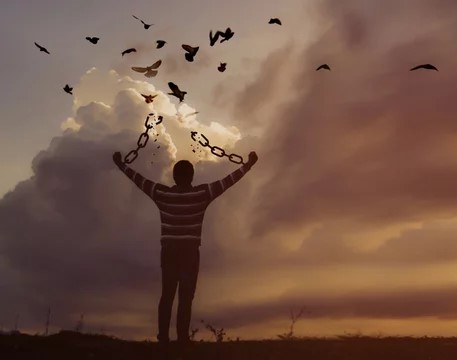
Never has the need for light been felt more urgently. An immense transformation is taking place within societies. After having been subjected for long centuries to the principles of authority, man himself aspires increasingly to shake off all obstacles and rule himself. As political and social institutions changed, religious beliefs and belief in dogmas weakened. It is still one of the consequences of freedom in its application to the things of thought and conscience. Freedom, in all domains, tends to replace coercion and authority, to guide nations towards a new horizon. The right of some became the right of all; but, for this sovereign right to be in conformity with justice and bear fruit, it is necessary that knowledge of moral laws should come to regulate its exercise. For freedom to be fruitful, to offer human works a secure and lasting foundation, it must be completed by light, wisdom, truth. Is not freedom for ignorant and vicious men like a powerful weapon in the hands of a child? The weapon, in this case, often turns against the one who carries it and hurts him.
Léon Denis – The Why of Life
 English (UK)
  Español
  Deutsch
  Português do Brasil
  Français
  Русский
  Türkçe
  Italiano