Dominique François Jean Arago
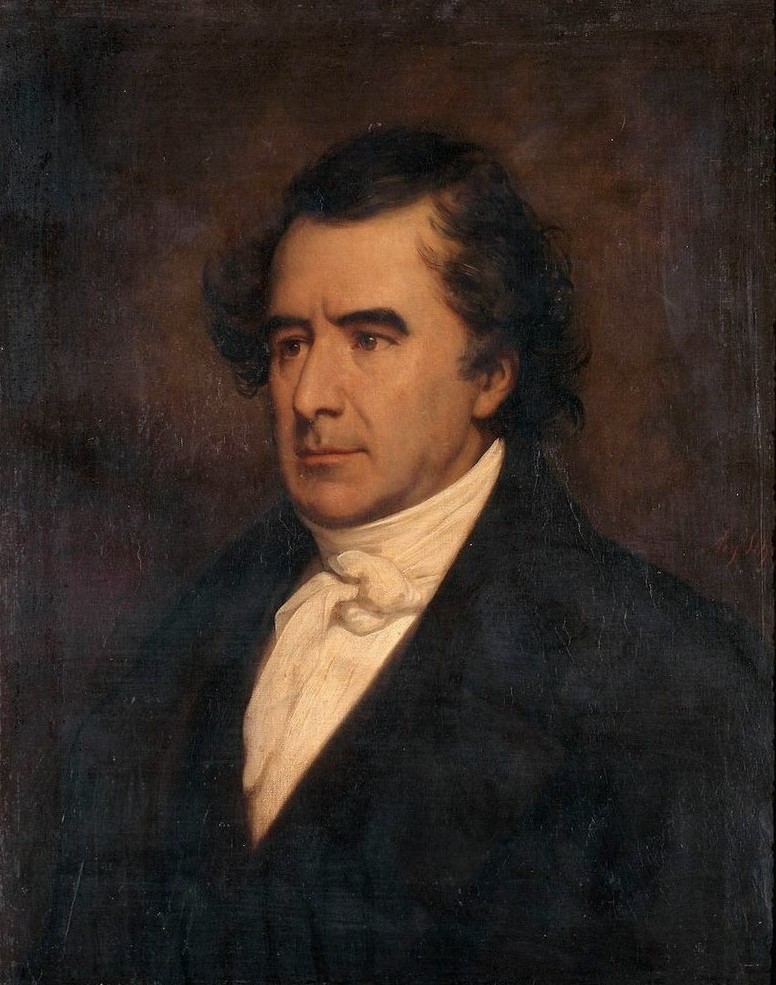
His message appears under point 8 of chapter XVIII of the fifth work of the Codification under the heading ‘Signs of the Times’. It honours the physicist and astronomer Dominique François Jean Arago, who was also a mathematician. He was born on 26 February 1786 in Estagel (France), near Perpignan, where he began his studies. His brilliant mind soon continued at the Ecole Polytechnique in Paris.
At the age of 19, he was appointed secretary of the Paris Observatory (built in 1667 by the architect Claude Perrault and considered to be the oldest functioning observatory in the world) and later its director. At the age of 23, he became professor of analytical geometry at the Ecole Polytechnique in Paris and devoted himself exclusively to science until the age of 44. Together with Biot (Jean-Baptiste, French physicist and astronomer, born in Paris), he completed the measurement of an arc of the Earth's meridian. He experimentally confirmed the wave theory of light. He discovered (1820) the phenomenon of rotational magnetism and proved the connection between the northern lights and magnetic fluctuations.
Together with Fresnel (Augustin-Jean, French physicist and engineer, born in Broglie), he discovered the chromatic polarisation of light, rotational polarisation and the laws of interference of polarised light. His complete works, comprising 13 volumes, were published after his death between 1854 and 1862. He is considered a great promoter of science among young people and an advocate of educational reform, freedom of the press and applied science.
In 1825, the Royal Society of London is said to have awarded him the Copley Medal (Monsieur Geoffrey Copley), the Society's highest honour for scientific discoveries or work of great importance or for contributions to science. He married at the age of 25 and became a father three times.
Politically, he was committed to the republican cause and held political offices in the government. As early as 1830, he was elected deputy for the department of Pyrénées-Orientales and later for Paris. In the provisional government that took power after the revolution of 1848, he was first Minister of the Navy and then Minister of War and introduced numerous reforms. As minister, he promulgated the decree abolishing slavery in the French colonies. France dedicated a stamp to him bearing the name of the physicist and politician. He died in Paris on 2 October 1853 and his body rests in the Père-Lachaise cemetery in the French capital.
That he fought for science and for a better social order is clear from the words that the codifier Allan Kardec inserted into Genesis: ‘The effervescence that sometimes manifests itself in a whole population, among people of the same ethnic group, is neither something accidental nor the result of a whim; it has its cause in the laws of nature. This effervescence, which is at first unconscious, nothing more than a vague desire, an indefinite aspiration for something better, a certain need for change, leads to a dull restlessness, then to actions that lead to social revolutions, which, believe me, also have their periodicity, like physical revolutions, because everything is connected.’
In Spirituality, with another vision, he concludes: ‘When you are told that humanity has reached a period of transformation and that the Earth must ascend in the hierarchy of worlds, there is nothing mystical in these words; on the contrary, you see the execution of one of the great fateful laws of the universe, against which all human unwillingness breaks.’
 English (UK)
  Español
  Deutsch
  Português do Brasil
  Français
  Русский
  Türkçe
  Italiano